
The side table you place beside an armchair in a 4-room resale HDB is a fundamentally different object from its counterpart in a Bukit Timah bungalow. It’s not just about style; the entire calculus of dimension, clearance, and function is dictated by your floor plan. A 14 sqm BTO living room, for instance, leaves perhaps 40 cm of clearance between the sofa arm and the walkway—a side table there can’t afford to be deeper than 35 cm, or you’ll bruise a hip every time you pass.
In many landed property halls, that spatial pressure vanishes. You might centre a substantial 60 cm round table between two lounge chairs, its marble top serving more for display than daily utility. The key metric shifts from minimum clearance to visual proportion, ensuring the piece anchors its zone without seeming lost. Condo lounge areas, typically around 20 sqm, occupy a middle ground; they allow for slightly larger occasional tables, but walkways to the balcony or dining area still demand careful planning.
For HDB dwellers, especially in older flats with narrower corridors, every centimetre is non-negotiable. A slim console behind a sofa, no more than 30 cm deep, often doubles as a more practical side surface than a freestanding table ever could. It’s a common compromise that saves floor space while adding a line for lamps and decor. The choice of material matters here, too—a glass top or open metal frame feels less imposing in a tight space than a solid block of wood.
Ultimately, the side table’s job is to serve the room’s traffic flow, not disrupt it. That might mean forgoing a second table altogether in a compact layout, or selecting a nesting pair you can tuck away when not in use. Before you measure the furniture, measure the pathways; the 60 cm needed for comfortable walking is a more critical number than any table’s listed width.
In a typical 4-room BTO living room, there’s often a 60cm gap between the three-seater and the TV console—that’s your primary walkway. A side table that’s 50cm deep will instantly halve that clearance, forcing a daily shuffle. The standard height range of 55 to 70cm isn’t arbitrary; it’s designed to align with seated elbow level, making it easy to reach for a drink without awkwardly stretching up or leaning down. Depth, however, is where the real spatial negotiation happens, usually falling between 35 and 50cm.
For most compact HDB layouts, a table around 40cm deep is the practical sweet spot. It leaves that crucial 60cm of clearance in a standard walkway, which is the minimum for comfortable passage in a furnished room. Anything shallower can feel precarious for anything heavier than a remote control; anything deeper starts to commandeer valuable floor real estate. This is why you’ll see many designs in rubberwood or metal with a 38cm to 42cm footprint—they’re built for the constraint.
Before you select a piece, take two concrete measurements. First, measure your existing sofa arm height; a table surface should sit level with it or just an inch or two below for seamless use. Second, use a tape measure to plot your planned walkway zones, especially the path from the main seating to the balcony or kitchen. That 15cm difference between a 35cm and a 50cm deep table can be the difference between a clear path and a perpetual shin-bruiser.
Material choice intersects with these dimensions—a slender, 35cm deep sintered stone top can feel more substantial than a bulky 45cm deep rattan piece. The goal is to avoid that cluttered corridor effect, where every piece of furniture seems to be jostling for position. Ultimately, a well-proportioned side table should disappear into the room’s function, not announce itself as an obstacle you’ve learned to navigate.
That film of condensation on your living room window each morning is a quiet warning for your furniture. Solid teak’s high natural oil content makes it a fortress against Singapore’s humidity, resisting the mould and swelling that plague cheaper woods. It’s a dense, heavy timber, which translates to a side table that won’t easily tip when a child grabs its edge or a pet bumps into it. You’ll find it in classic, often darker finishes that can handle the occasional forgotten, sweating glass. While the initial outlay is higher, a well-made teak piece in a four-room BTO living room can easily outlast the decade-long refresh cycle many homeowners plan for.
Rubberwood, once dismissed, has been engineered into a humidity-resistant workhorse through proper kiln-drying and sealing. The treatment process removes the sap and moisture that would otherwise attract termites or warp in an 80% humidity environment. It’s typically lighter than teak, so stability relies more on a well-designed base and a lower centre of gravity—something to check if you’ve got an active household. For the price, it’s a pragmatic choice for a console table in a Pasir Ris condo, offering solid wood stability without the premium timber cost.
Metal frames are inherently stable, but the finish is everything. Powder coating creates a thermoset polymer layer that’s far more resistant to moisture and scratches than standard paint, which can bubble and rust around coastal areas like Marine Parade. This isn’t just about colour; it’s a thick, durable skin that protects the metal from the constant dampness in the air. A powder-coated metal base paired with a solid wood top gives you the best of both worlds: unwavering stability and a surface that feels warm. It’s the unsung hero for furniture that needs to look pristine after years in a busy, air-conditioned living room.
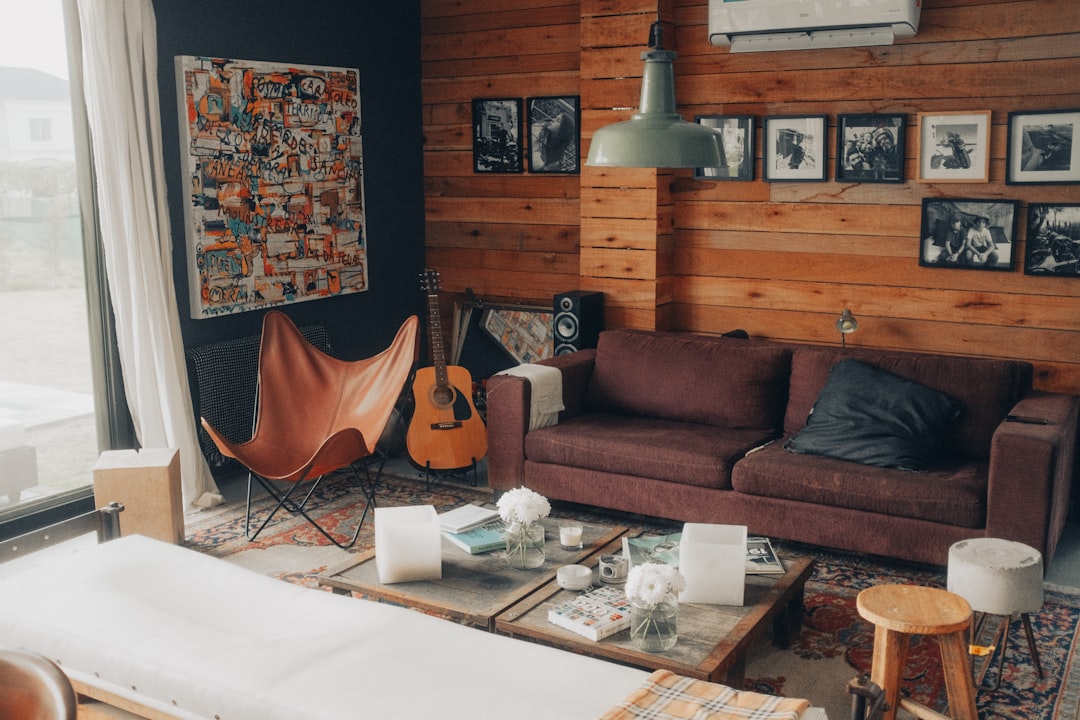
A warped laminate edge on a cheap side table is a common sight in many humid flats—it starts as a slight bump you feel with your hand, then a visible wave. Veneers and engineered wood are only as good as their substrate and adhesive; cheaper versions delaminate when the particleboard core swells with absorbed moisture. This isn’t to say all laminates are bad, but in a climate like ours, you’re betting on a perfect, unbroken seal. For a frequently used living room side table, where spills from drinks are inevitable, it’s a risk that often materialises within a couple of monsoon seasons.
Beyond the base material, specific certifications and finishes are your tangible proof of durability. Kiln-dried certification for wood is non-negotiable; it means the timber was baked to a stable moisture content, preventing future movement. Look for water-resistant finishes like conversion varnish or catalyzed lacquer—they’re harder and more moisture-impervious than simple oil or wax. A furniture piece that bothers to state these details is typically engineered with the local climate in mind. It’s a signifier that the maker understands a side table in a Toa Payoh HDB isn’t just decorative; it’s in the frontline of daily life.
A buyer in a five-room resale flat near Eunos recently discovered their new 1.2-metre-wide side table couldn't actually fit beside the sofa — the online listing, scaled for a landed property's living room, hadn't accounted for the bay window protrusion. It's a classic Singaporean error, and it usually starts with a failure to visualise dimensions in real space.
Oversized pieces ordered from overseas platforms are a particular trap. That solid wood console table might look proportionate in a spacious American loft photo, but in a 4-room BTO living room, it'll dominate the walkway and make the entire space feel cramped. The discrepancy between online imagery and local room scales is stark; always check the centimetre specifications against your own floor plan, not the aspirational lifestyle shot.
Neglecting built-in features is another common oversight. In many BTOs and older HDB flats, the living room isn't a perfect rectangle — there's that awkward bay window, or a structural column, or a pre-installed air-con ledge. A glossy white side table might seem like a sleek choice, but in a high-rise unit facing the PIE, it'll show a fine layer of dust and grime within days, becoming a constant maintenance chore rather than a functional surface.
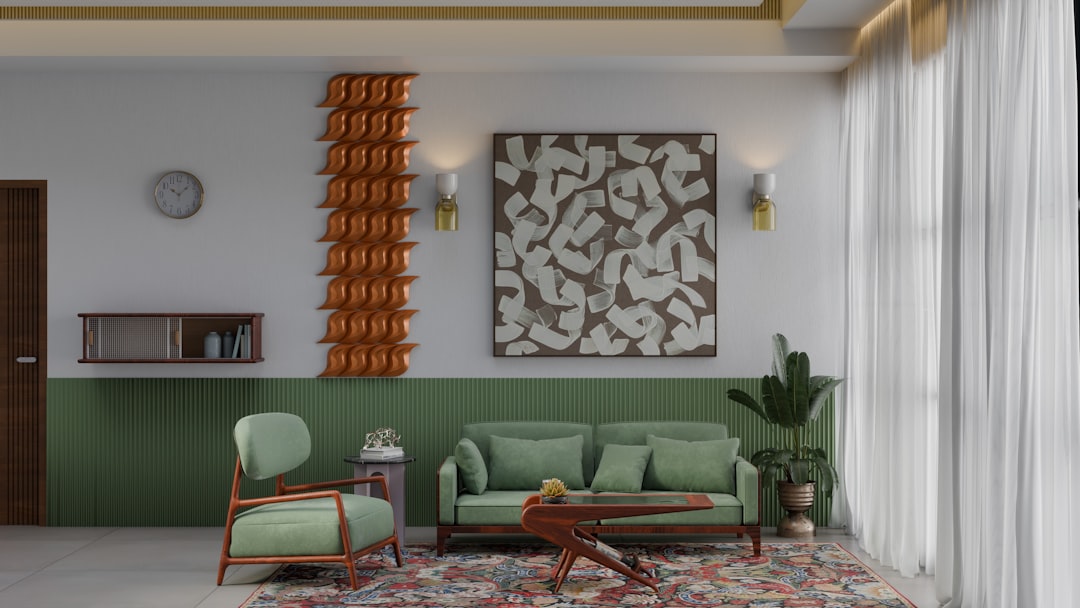
The simplest remedy is often the most effective. Before committing to any purchase, use painter's tape to map out the exact footprint of the piece on your floor. You'll immediately see if it blocks a door swing, crowds the walkway to the balcony, or leaves insufficient room for the curtain to fall. That visualisation step, though tedious, saves the real headache of arranging returns for furniture that simply doesn't belong in your neighbourhood.
A 50cm square table looks compact in a product shot, but on a showroom floor, that footprint suddenly feels substantial—or surprisingly slight. This is the primary reason to visit a physical showroom; digital dimensions are abstract, but your shin connecting with a table leg at Megafurniture's Joo Seng or Tampines location is a concrete lesson in spatial planning. You'll immediately gauge whether a piece will overwhelm a narrow corridor in a 4-room BTO or get lost beside a sectional sofa in a landed property's living area. Beyond scale, you're testing for the realities of daily life. A side table's listed weight capacity is one thing; placing your full coffee mug and a hardcover book on its surface reveals its true stability. Running a hand over a rubberwood veneer or a sintered stone top addresses those unspoken concerns about finish quality and long-term durability against Singapore's humidity. You're not just looking for furniture—you're stress-testing it for years of use in an HDB or condo, where every piece must earn its keep. The configurations on display are also tailored to local constraints. You'll see how a storage-oriented console table might fit under a specific window sill in a common bedroom, or how the proportions of an accent chair work with a low-profile TV console in a compact layout. It’s this direct correlation to Singaporean room sizes that makes the trip worthwhile; you’re visualising solutions for your actual space, not a generic room. Ultimately, a showroom visit cuts through the indecision that online browsing can create. You'll develop a tactile benchmark for what "sturdy" actually means, and your preference might shift from a light oak finish you loved online to a warmer walnut that simply feels richer in person. It turns speculative shopping into a definitive selection process. For anyone comparing complete-room solutions, a trip to view the
living room furniture collectionin person is often the fastest way to move from planning to purchasing.
The delivery van arrives at your HDB block, and that’s when the real logistics begin. For many flats, the lift access dimensions are the final, non-negotiable checkpoint—a bulky side table that fits in your 4-room BTO living room is useless if it can’t clear the 1.2m by 2.1m lift door. Confirm these measurements with your retailer, and pin down the PIE delivery timing slot; a 3-hour afternoon window is typical, but it’s the difference between a smooth handover and a frustrated reschedule. Self-assembly might shave a few hundred dollars off the total, but it’s a trade-off with final placement. In narrow corridors common to older HDB blocks like those in Bedok or Tampines, a flat-pack box is easier to manoeuvre than a fully assembled piece. The catch is you’ll be the one wrestling it into position, potentially scuffing walls or that new vinyl floor. White-glove service solves that, but it often comes with a premium and requires clearer access paths. On the warranty front, a 12-month cover against manufacturing defects is standard. Read the terms closely, though. That solid rubberwood tabletop might be guaranteed against splitting, but accidental water rings or warping from constant exposure to afternoon sun through your west-facing window often aren’t covered. Climate-related damage is a frequent point of contention in our humidity. The assembly choice ultimately shapes the room’s layout from day one. A professional team will place that marble-top console exactly where you want it, heavy and settled, while a DIY approach might leave it half a metre from the wall because it’s just too awkward to move again. For a final selection, browsing a comprehensive
living room furniture collectionlets you filter for dimensions and service options upfront. Consider the warranty your back-up plan, not a feature. It’s there for the drawer that won’t slide or the leg that wobbles from a factory flaw, not for the wear and tear of daily life in a bustling household.
The search history for a side table in Singapore often reads like a list of spatial negotiations. It’s rarely just about style; it’s about solving a specific domestic puzzle with centimetres to spare.
What works for a narrow HDB corridor, then? You’ll want a console table that’s shallow — think under 30cm deep — and preferably wall-mounted. A leggy, open design keeps the walkway feeling clear, which is crucial when that corridor might only be 90cm wide to begin with.
Kid-safe designs almost always mean rounded corners, but the material matters just as much. Avoid glass tops and sharp metal edges; opt for a solid wood or laminate side table with fully sanded, curved profiles. It’s a small concession to safety that prevents a world of tears during Saturday morning cartoon chaos.
Sturdy support beside a recliner is a different challenge. A standard side table often gets knocked by the recliner’s mechanism. The better solution is a slightly heavier, lower-profile occasional table, positioned just beyond the chair’s arc of motion — a solid rubberwood piece with a broad base won’t tip when you reach for your tea.
And for that spot near the window, where humidity is a constant, forget solid wood unless it’s thoroughly sealed. Powder-coated metal, treated rattan, or sintered stone are far more resilient choices; they won’t warp or develop that faint bloom of mould after a few weeks of our relentless weather. Browse the full range of solutions for these specific scenarios in Megafurniture’s living room collection.
For tighter spaces, consider round or oval tables which take up less visual room and are easier to navigate around. Nesting tables or models with shelves offer surface area and storage without a large footprint. Choosing a slender, leggy design can also make a table feel less imposing while still providing essential utility.
Before selecting a side table, accurately measure the height, width, and depth of the space where it will reside. Note the clearance needed from nearby furniture like sofas and armchairs to ensure easy access. Always account for walkways, leaving at least 18 inches of space to maintain good traffic flow in your living room.
The ideal side table height typically aligns with the arm height of the adjacent seating, usually between 22 to 28 inches. This creates a seamless surface for placing drinks, books, or lamps without excessive reaching. A table within two inches of the sofa arm's height offers the most functional and visually balanced look.
The table's surface area should be proportional to the size of your couch or armchair; a large sectional needs a more substantial table than a single accent chair. Its depth should not exceed the depth of the sofa arm to avoid protruding awkwardly into the room. This proportional approach ensures the table serves its purpose without dominating the space.
That final walk-through in the showroom, with the side table looking perfect under the gallery lights, is where most mistakes happen. Back home, in the specific light and clutter of your actual living room, the proportions shift. Your decision framework needs to bridge that gap.
Start with physical verification. Use a tape measure to confirm the actual gap beside your sofa or armchair—don’t rely on memory. Leave at least 40cm for walkways in a 4-room BTO layout; a landed property’s generous lounge might afford 70cm or more. Then, lock down its primary job. Buyer wants a stable drink holder for movie nights, a display ledge for a prized ceramic vase, or closed storage for remote controls and magazines? That single function dictates the table’s ideal surface material, height, and whether it needs a drawer or shelf.
Material choice is non-negotiable in our climate. A side table facing a window in a east-facing Bedok condo will get blasted with morning sun and high humidity, so sealed solid wood or sintered stone will hold up better than unfinished timber. For a damp-prone ground-floor patio area in a landed home, look for powder-coated metals or all-weather rattan. Your budget must include delivery and assembly fees, which can add $80 to $200 to a $400 piece—factor it in upfront or risk a nasty surprise.
Prioritise footprint over style for BTOs and compact condos; a slim, oblong silhouette often works better than a chunky cube. Landed properties can obviously accommodate larger, sculptural statement pieces. Finally, verify the showroom’s return policy for large items before you commit. Some retailers offer a straightforward exchange if the piece doesn’t fit, while others impose hefty restocking fees—knowing this is your last line of defence against a costly misjudgement.