The pre-1990s HDB flat you bought in Toa Payoh might have polished cement floors that look perfectly dry — but they’re often a reservoir for moisture from decades of humid Singapore weather. That’s why your rug’s first defence isn’t its material, but your floor’s condition; the checks you need to run differ wildly between a laminate-over-concrete setup in a condominium and the marble slabs common in Bukit Timah landed homes.
For any resale flat built before the 1990s, moisture testing is non-negotiable. You can’t rely on visual inspection alone. A simple plastic sheet test, left overnight on the cement, will reveal condensation if there’s significant vapour transmission — a problem that causes mould under rugs and degrades adhesives. In newer BTOs with vinyl flooring, the issue is adhesion; the entire sheet must be fully adhered to the concrete substrate, because any lifting or bubbling at the edges creates an uneven plane that wears a rug’s underside quickly.
Flatness is the universal metric, though. The tolerance is under 3mm over a 1-metre span; you can check this with a spirit level or a straight edge. A marble floor in a landed property might seem impeccably flat, but individual slabs can settle unevenly over time, creating subtle ridges. Laminate flooring, especially if it’s a floating installation over concrete, often has more flex and minor undulations at the seams.
Ultimately, the floor type dictates your preparation work. Polished cement requires moisture mitigation — sometimes a sealant — before any large rug goes down. Laminate needs you to ensure it’s fully locked and flat, avoiding areas near doors where movement is greatest. And with marble, you’re mostly confirming flatness and checking for cracks that could snag a rug’s fringe. Skipping these steps means your rug becomes a sacrificial layer, absorbing the floor’s imperfections within a season.
Examine the subfloor for any significant unevenness, sharp protrusions, or moisture issues. Address any minor repairs needed to create a stable, flat surface. This critical step protects both your new rug and the flooring beneath it.
Prepare tools such as a tape measure, utility knife, rug pad, and double-sided tape in advance. Having everything within reach streamlines the installation process. A rug pad is highly recommended for added cushioning and slip resistance.
Remove all existing furniture and decor items from the designated floor space. This provides a completely open and safe workspace for your installation. Ensure you have a clear path to maneuver the new rug into position.
Thoroughly vacuum or sweep the exposed floor to eliminate dust, debris, and pet hair. For hard surfaces, a damp mop can ensure a perfectly clean foundation. A clean subfloor prevents particles from causing lumps or premature wear under the rug.
Most buyers start with room dimensions, then watch their chosen rug swallow half the floor space. In compact living rooms, that’s a recipe for congestion — you’ll end up with no clear walking path from the main door to the kitchen, or a sofa that appears to float on an island of wool.
The key is to measure the rug’s exact footprint, not the room’s perimeter. That means accounting for sofa legs, which often sit 30 to 40cm forward from the wall, and ensuring at least a 20cm gap between the rug edge and any major walking lane. In many 4-room HDB layouts, the living area is around 12 sqm; a standard 240x170cm rug can dominate that space entirely, leaving only narrow strips of exposed flooring around the edges.
Custom sizing resolves this neatly, though it typically adds around 20% to the cost. A more common compromise is to opt for a 200x140cm rug, which still anchors the seating zone without overwhelming the room. This size allows for that essential perimeter gap — a visual breathing space that makes a compact area feel organised, not cramped.
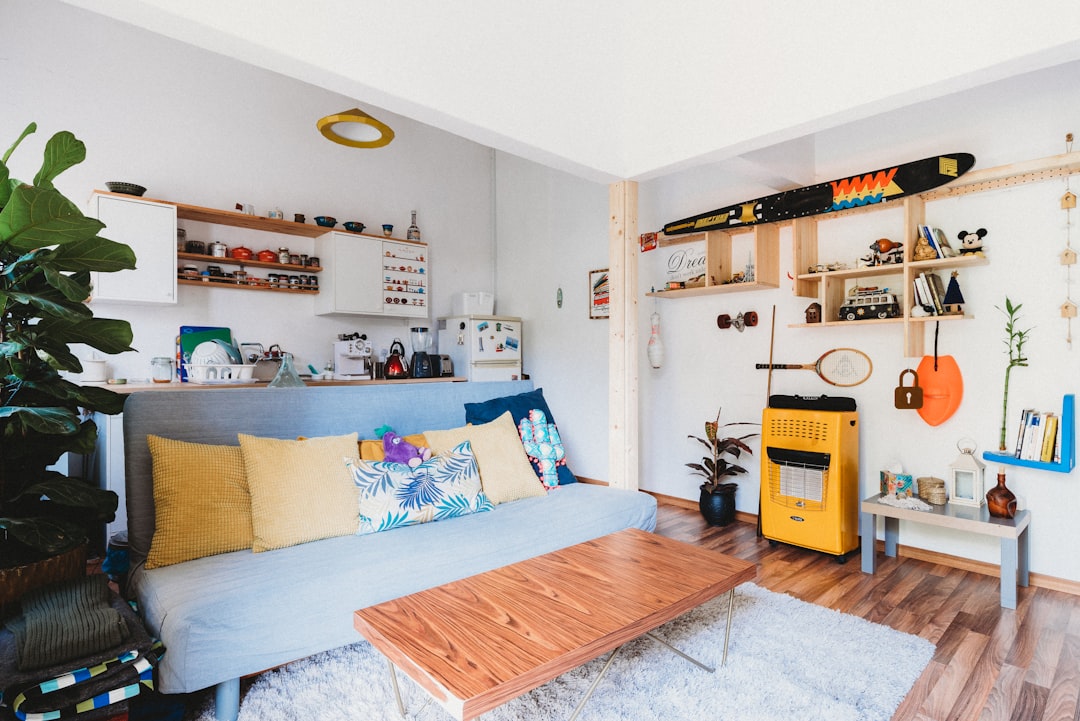
Consider your furniture layout’s fixed points: the TV console’s depth, the coffee table’s position, the likely route from the corridor to the balcony. Then mark out the rug’s proposed area on the floor with masking tape. You’ll quickly see if it’s practical; a rug that forces you to step over its fringe every time you cross the room is a design mistake, not a centrepiece.
" width="100%" height="480">Pre-installation checklist: Preparing your living room floor for a new rugThe most expensive rug in a showroom can still sound like a scratching post when it’s laid directly over a condo’s polished marble. That’s the first, and often loudest, mistake: ignoring an acoustic underlayment. In many multi-storey developments, especially those with open-plan layouts, footfall noise transmits easily to the unit below. A proper rug pad, typically 8mm to 12mm thick, doesn’t just cushion your step; it creates a sound-dampening barrier that neighbours will appreciate. Skipping it for a thin, non-slip mat is a common false economy.
Another frequent oversight involves floor repairs. It’s tempting to assume a patched-up concrete screed or a filled-in tile spot is ready for covering. It rarely is. Placing a rug over an uneven patch creates a visible dip or a persistent lump that wears the rug’s backing unevenly. The solution isn’t just a thicker pad—it’s using a levelling compound to ensure the subfloor is flat across the entire installation area, a step many buyers rush past in their eagerness to see the finished room.
This eagerness also leads to a third assumption: that floors are ready for installation immediately after painting. In Singapore’s humidity, emulsion and enamel need more than a day to fully cure off-gassing solvents and moisture. Laying a rug too soon can trap these vapours, leading to a faint chemical odour that lingers for weeks, or in worse cases, causing moisture to become trapped against the floor finish. A good rule is to wait at least 72 hours with windows open, longer for oil-based paints or during the monsoon season.
The underlying issue is treating the rug as a final accessory rather than an integral part of the floor system. In a 4-room BTO, where the living room floor is one continuous surface, its preparation dictates the rug’s longevity and feel. A well-prepared base makes even a modest wool-blend rug perform like a centrepiece; a neglected one dooms even a hand-knotted silk piece to look and feel second-rate. It’s the unglamorous work, the filling and sanding and waiting, that separates a temporary fix from a lasting foundation.
A rug in a ground-floor Tampines HDB unit with a perpetually damp corner tells you everything about material failure. It’s not the cat’s claws that ruin it first; it’s the mould blooming along the edges where the weave absorbs moisture from the concrete slab below.
For Singapore’s humidity, synthetic fibres like polypropylene or nylon are the pragmatic choice—they resist mould inherently and won’t degrade in a room where the air-conditioning is only used at night. Wool, while luxurious, demands aggressive climate control; without consistent air-conditioning to keep humidity below 70%, it can become a breeding ground for mildew, especially in landed properties with less uniform airflow. The texture you want is a tight, low-profile weave. A dense flatweave or short-loop synthetic withstands claws far better than a lofty shag, where a cat’s scratch can unravel entire tufts in seconds.
Natural fibres like jute or seagrass are charming but fundamentally incompatible with dampness-prone spaces. They absorb moisture like a sponge, leading to rot and a persistent musty smell—a poor match for ground-floor apartments in neighbourhoods like Bedok or older estates where dampness seeps in. If you’re committed to a natural look, consider a synthetic blend designed to mimic that texture; it’ll handle both the occasional spill from a pet’s water bowl and the ambient moisture without deteriorating.
Ultimately, the decision hinges on your home’s specific microclimate and your pet’s habits. A rug in a 4-room BTO with good cross-ventilation might tolerate a wool blend, but for most households, a performance synthetic is the safer, longer-lasting investment. You can find options built for these conditions in Megafurniture’s collection, focusing on those labelled for high-humidity or pet-friendly use.
A rug that looks lush online can feel disappointingly thin underfoot — that’s the risk of buying solely from a product photo. Pile height and backing density are tactile qualities that a showroom visit at Megafurniture’s Joo Seng or Tampines outlets makes immediately clear. You can press your fingers into the weave, feel the weight of the backing, and see how a low-pile polypropylene rug meant for high traffic compares to a plush wool-blend piece. This hands-on assessment is the only reliable way to gauge comfort and durability before committing.
Floor staff there are accustomed to Singapore’s spatial puzzles, particularly corridor-heavy HDB layouts. They’ll ask about your lift’s dimensions and your unit’s doorway clearances, then explain the installation logistics for a large 2m x 3m or 3m x 4m format. They can tell you if a rug needs to be rolled through a specific way, or if it’s better to opt for a runner and a smaller centre piece to avoid a costly delivery headache. It’s a practical conversation that online chat simply can’t replicate.
Perhaps the most valuable aspect is visualising custom-cut options against their extensive vinyl floor displays. You can lay a potential rug sample over different woodgrain or stone-effect finishes to see how the colours interact in your intended setting. Does that grey-beige rug turn muddy against warm oak laminate, or does it pull the scheme together? Seeing it in a room-like context prevents the common mismatch between your screen and your living room’s actual lighting.
For a comprehensive look at how rugs integrate with other living room pieces, browsing their collection on-site provides that full-room perspective. You’ll leave with a concrete sense of scale and texture, which is critical when a rug often becomes the foundation for the rest of your furniture layout.
The delivery team will arrive, rug in hand, only to find the stairwell door of your condo's service entrance permanently locked. That’s a common, costly oversight. For HDB blocks, you’ll typically need to pre-book lift cloaking with your town council—a process that can take a few days and involves padding the lift interior, so plan your delivery date around that. In many landed properties, narrow side gates are the real hurdle; measure them against the rolled rug’s length, not just the room’s square footage.
Once it’s inside, don’t rush to unroll it in its final spot. Synthetic fibres and even natural wool need about 48 hours to acclimatise to your living room’s humidity and temperature; leaving it flat in the space where it will live prevents later expansion or contraction. Unroll it, but don’t position furniture on it just yet. This step is often skipped in Singapore’s rush to finish a room, but it’s what stops a perfectly flat rug from developing annoying ripples a month down the line.
Your warranty matters most for the problems you can’t see coming. Specifically, ask if it covers edge curling or delamination in unventilated spaces—a real risk in our climate, especially if the rug will sit in an air-conditioned living room that’s then shut up for a weekend away. The moisture has to go somewhere, and it often attacks the glue in the rug’s backing. A robust warranty should acknowledge these local conditions, not just standard manufacturing defects.
Post-installation, the first clean is critical. Vacuum it thoroughly to remove any loose fibres from manufacturing, but avoid heavy beater bars on delicate piles. For the first few weeks, you might notice a slight scent, which is normal for new textiles airing out. If you’re pairing it with a new sofa or TV console, slide furniture legs onto coasters before moving them into place; dragging a heavy oak coffee table across a virgin wool pile is a sure way to leave permanent tracks.
Consider the rug’s future from day one. Rotate it 180 degrees every six to twelve months, especially in high-traffic zones like the path from your HDB’s main door to the kitchen—this evens out wear from sunlight and footfall. Professional cleaning for a large 3m x 4m rug can cost around $150 to $300, so factor that into your long-term budget alongside the initial price.
The best rug advice often comes from the specific, slightly panicked questions posted in neighbourhood renovation groups late at night. They reveal the real friction points between a nice picture and a floor that actually works.
Can a rug pad damage HDB vinyl? It can, if you use the wrong type. Thick, solid rubber pads that trap moisture are the main culprit; they can discolour vinyl or leave a permanent imprint over months. For vinyl or laminate, you’ll want a felt-rubber composite or a flat, non-slip PVC mesh — anything that breathes.
How do you stop corner lift on polished cement? That’s usually a tension issue with the rug’s own backing, not the floor. On cool, smooth cement, a decent rug pad adds just enough grip to pull the corners flat. If it persists, a double-sided carpet tape at each corner works, though you’ll need a proper adhesive remover when you eventually move the rug.

Is professional stretching needed for a 3x4m rug in a landed house? Typically, no — that’s a standard size that ships rolled and should lie flat. Professional stretching is for broadloom carpet installed wall-to-wall. For a large area rug, the real concern is weight; a 3x4m wool rug is heavy, and a good pad keeps it from shifting and reduces wear in high-traffic zones like a terrace living room.
What’s the difference between non-slip backing and a separate underlay? The backing is often a latex or PVC coating sprayed onto the rug itself — it’s a basic safety feature for small rugs on tiles. A separate underlay, or rug pad, is a different product altogether; it adds cushion, protects your floor from scratches, and dramatically improves the rug’s feel underfoot. In short, backing stops a bath mat from sliding, but a pad makes your living room rug feel like a proper piece of furniture.
That moment of unboxing a new rug is often ruined by a patch of damp concrete or a forgotten screw. The final checks aren't about the rug itself, but about the stage you’re laying it on. First, confirm your floor is level, completely dry, and free of debris—a speck of grit under a wool rug will grind itself into a permanent bald spot. For laminate or engineered timber floors, use a spirit level across a few different axes; minor dips in an HDB slab are common, but a severe slope means your rug will buckle and furniture will wobble.
Your furniture layout should be finalised, not pencilled in. It’s a common mistake to measure for a rug around a hypothetical sofa placement, only to find the real piece arrives 10cm wider and throws the entire balance off. Have your key pieces—the TV console, the main armchairs, the coffee table—physically in position or at least have their exact dimensions and footprint taped out on the floor. This is when you’ll know if a 200cm by 300cm rug truly anchors your seating area or if it’s going to look like a misplaced postage stamp.
The underlayment question is typically settled post-showroom consultation. A thick, plush wool rug in a condo living room might not need one, while a thin, flat-weave jute rug over cold marble in a landed property almost certainly will. The consultant’s advice on padding—whether for extra cushion, thermal insulation, or to prevent slip—often hinges on seeing your specific floor type and the rug’s backing material.
Finally, schedule the delivery for after your major furniture has arrived. There’s little point in having a beautiful, hand-knotted centrepiece delivered to a 4-room BTO that’s still a warehouse of flat-pack boxes; it’ll just get rolled up in a corner and become an obstacle for weeks. Coordinate it as the finishing layer, the thing that pulls the room together the day after your sofa is unwrapped.