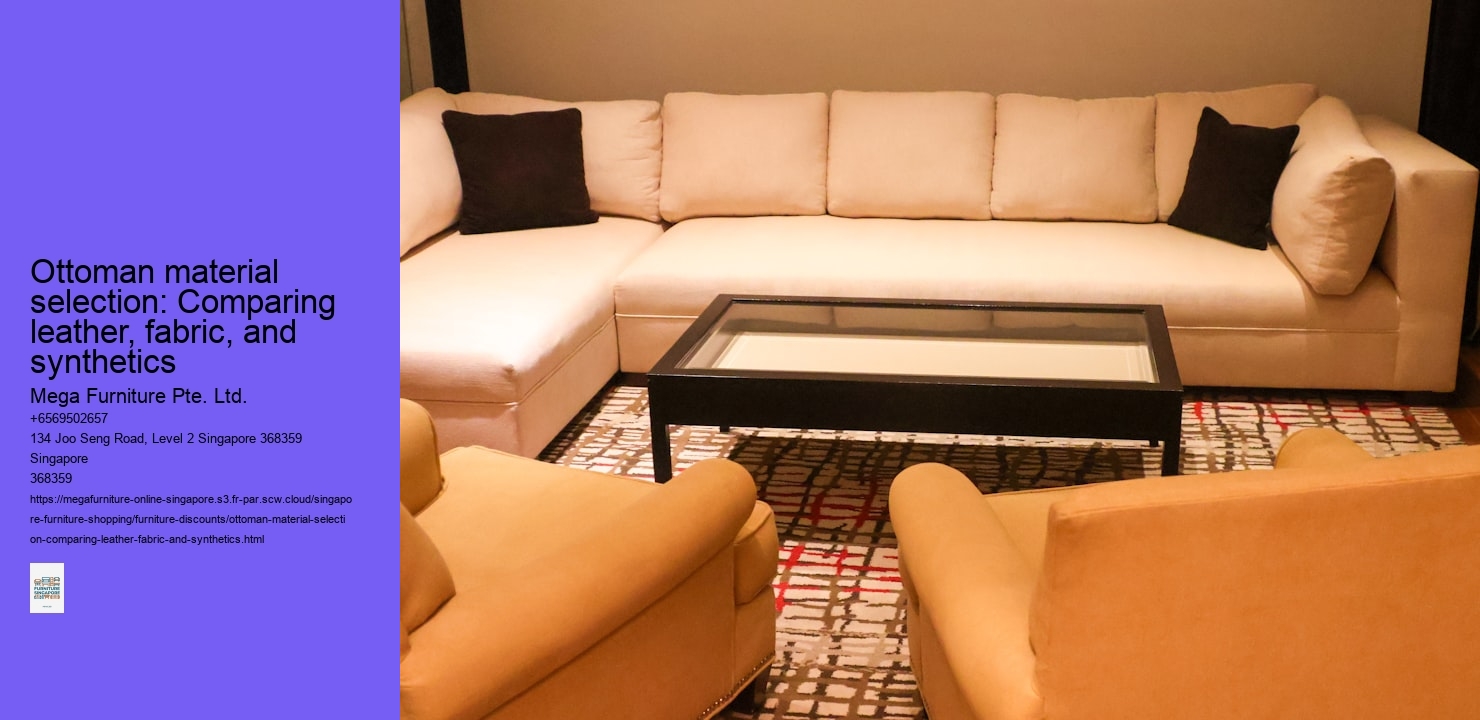
In a typical 4-room BTO, the living room often ends up as a negotiation between a three-seater sofa and a walkway to the kitchen. That’s where the ottoman earns its keep. It’s the punctuation mark in a compact layout—a full stop for tired feet, a question mark over its function for the day, or an exclamation point of extra seating when relatives visit during Chinese New Year. Its real value isn’t in being a single-purpose footrest, but in its quiet versatility across Singapore’s three main housing archetypes.
For HDB and BTO layouts, where every square metre is accounted for, an ottoman’s dimensions are critical. A standard 2-seater ottoman can easily overwhelm a 12 sqm living room, blocking the flow to the balcony or dining area. Here, it often works hardest as hidden storage for board games, spare cushions, or that single bulky winter coat—clearing floor space is a premium service. In many landed property entertainment zones, the calculus shifts. A larger, statement piece can anchor a conversation pit or serve as a casual coffee table for movie nights, its scale finally matching the room’s.
Condominium spaces, particularly those in newer developments with open-plan living and dining, use the ottoman as a spatial organiser. A long, low design can subtly demarcate the living zone from the dining area without the visual weight of a solid console or bookshelf. It’s a piece that doesn’t shout its function, which is precisely why it fits. Buyer wants storage? A lift-top model with a fabric-lined interior keeps clutter out of sight. Need a surface? A sturdy, tray-top design in leather or performance velvet handles drinks and remotes.
Material choice, then, becomes a direct function of this assigned role. A storage ottoman in a family-centric HDB might favour easy-clean synthetics or stain-resistant Crypton fabric, while a leather-topped piece in a condo might prioritise a sleek profile for its coffee table duties. The common thread is intentionality—picking a piece that solves for your specific room’s size and your household’s actual habits. Browse the full spectrum of functions and finishes in Megafurniture’s collection to find the right fit.
The reality is that your ottoman's material life is defined by three things: humidity, claws, and kopi. In a non-aircon HDB living room, humidity hovers around 80% for months—that's not just a number, it's a mould incubator. A cat's favourite scratching post, meanwhile, is rarely the one you bought. And a spilled iced teh tarik doesn't care about your interior colour scheme.
Leather, particularly aniline, offers a cleanable surface that resists mould; a quick wipe with a damp cloth usually does it. But that same soft, natural finish is a beacon for cat claws, leaving permanent, shredded marks that no conditioner can fix. It's a trade-off: superior wipeability against a very specific, furry vulnerability.
Fabric, especially natural fibres like cotton or linen, brings breathability that helps mitigate that sweaty-back feeling on humid evenings. They don't stick to skin like some synthetics can. The catch is they're a magnet for stains and pet hair; a single spill soaks right in, and cleaning often requires professional methods. Performance fabrics treated for stain and water resistance change this equation, but they typically carry a premium.
Synthetic options—PU leather or polyester blends—present a pragmatic middle ground. They're inherently stain-resistant and laugh off spilled drinks with a simple blot. Their uniform, non-porous surface also makes them less appealing for mould growth. However, that plastic-based composition has a downside: in a stuffy room, it can feel clammy and lack breathability, which is why a cheap PU ottoman in a west-facing condo unit often feels tacky by dusk.
Your choice, then, isn't about a perfect material but which compromise you can live with. Prioritise the wipe-down if you're vigilant about spills and dampness, accept the risk of patina (or destruction) if you have pets, or lean on treated synthetics for their defensive ease—just don't expect them to feel like luxury.
Double-stitched seams on a leather or vinyl ottoman aren't just decorative; they're a primary indicator of structural integrity. This detail suggests the manufacturer has accounted for the constant pressure and shifting weight common in a living room, where the piece might serve as a footrest, impromptu seat, or even a surface for trays. Single stitching tends to fray or pull apart after a year of regular use, especially along stress points like the corners. In Singapore's humid climate, the extra thread also helps prevent the material from stretching and tearing at the seams. It's a small visual cue that often correlates with better overall frame construction. You'll find this feature consistently across higher-grade offerings.
Zippered, removable cushion covers transform an ottoman from a fixed object into a practical, long-term investment. This allows for thorough washing, which is essential in households with children, pets, or simply the inevitable spills from coffee during movie nights. Without this feature, a fabric ottoman's lifespan is dictated by the first major stain, forcing a costly reupholstery job or a cover-up with a throw. In many HDB flats where space is tight and the ottoman sees daily use, the ability to refresh the fabric keeps the room feeling clean. It's a signal the designer considered real life, not just a showroom display.
Solid rubberwood frames represent a significant step up from particle board or laminated composites, particularly in a humid environment. Particle board can swell and weaken when exposed to moisture over time, leading to wobble and eventual failure in a piece that's constantly bearing weight. Rubberwood, a common hardwood used in quality furniture here, offers superior stability and durability for the price. An ottoman with a solid frame won't creak or feel hollow when you move it across your ceramic tile or engineered flooring. It's the unseen foundation that dictates whether the piece lasts five years or fifteen.
Beware the allure of "premium faux leather" that peels spectacularly by its second year, a common disappointment with cheap online imports. Genuine leather or high-quality vinyl will develop a patina with age, not a plastic film that cracks and flakes onto your socks. The difference is often in the backing; better materials use a fabric or breathable base, while the poor-quality versions are essentially plastic sheets. That peeling isn't just ugly—it's impossible to repair neatly, leaving you with a eyesore in the centre of your living room. Insist on knowing the exact material composition before you commit.
A quality ottoman should feel substantial and planted, not tippy or lightweight. This heft comes from the frame material and the density of the cushioning foam, not from adding cheap ballast. A well-balanced piece won't slide easily on polished floors when used as a footrest, and it should support an adult's weight without the base skirting buckling. In a compact 4-room BTO layout where furniture is constantly navigated around, stable weight prevents accidents and wear. If it feels insubstantial in the showroom, imagine it after two years of weekend use.
The oversized ottoman, a favourite for extra seating and hidden storage, often ends up permanently parked in the centre of a 4-room resale flat’s living room—blocking the main walkway from the main door to the kitchen and creating a daily obstacle course. It’s a classic layout error, prioritising form over the fundamental flow of a compact home. Buyers fall for the generous proportions in a showroom, forgetting that a 120cm-wide piece needs clear space around it to function; in many HDB layouts, that simply doesn’t exist without sacrificing movement.
Material choice is another frequent misstep, especially for families. Opting for a light linen or cream bouclé ottoman because it looks serene in a showroom condo is a decision most parents of toddlers come to regret within a week. Performance fabrics, like Crypton or treated velvets, aren’t just marketing—they’re a practical shield against spills and sticky fingers in a high-traffic zone. The allure of a particular aesthetic often overrides the reality of daily life in a landed property’s family room or a condo’s main living area.
Then there’s the planning oversight, particularly for BTO owners awaiting keys. They’ll choose an ottoman for its look, completely ignoring its storage function during the initial space planning stage. That’s a missed opportunity in a home where every square metre counts; an ottoman that doesn’t swallow blankets, toys, or board games is just a bulky cube taking up precious floor space. It pays to think of each piece as solving at least two problems, especially when you’re starting from bare walls.
Two final, physical checks can save a lot of hassle. First, measure your BTO’s main doorway and lift dimensions before delivery—that plush, fully assembled storage ottoman might not fit through the 80cm-wide door of your new Sengkang flat. Second, check the leg fittings. Metal caps on hard plastic glides might be fine for vinyl plank flooring, but they can scratch polished marble or engineered stone in a condo entrance. A simple felt pad is an inexpensive fix for a potentially costly repair.
The difference between a living room that feels like a catalogue image and one that actually lives with you often comes down to texture and proportion—two things a digital swatch can’t convey. A full-grain leather might look rich online, but its hand-feel under Singapore’s perpetual humidity is the real test; a performance fabric’s fade resistance needs to be judged under a showroom’s simulated afternoon sun, not just described in a product bullet list. That’s the practical advantage of visiting a physical space where you can handle material samples and see how finishes react to light before committing to a complete-room solution. At a showroom, you’re not just picking an ottoman in isolation. You’re assessing how its 60cm height aligns with the arm of your existing sofa, or whether a square pouffe leaves enough clearance in front of a low-slung TV console in a 4-room BTO layout. Spatial relationships are deceptive on a screen—a coffee table that looks modest in a product shot can dominate a narrow walkway between your sofa and media wall. Placing items together in three dimensions reveals these fit issues instantly, letting you gauge if a set of nesting tables or a specific storage ottoman will streamline your space or clutter it. This hands-on evaluation is crucial for anyone piecing together multiple elements, like a TV console, a coffee table, and complementary seating. You’ll notice if the wood tones between pieces clash in person, despite both being labelled ‘oak’, or if the scale of a large accent chair overwhelms the console it’s meant to flank. For homeowners in landed properties with expansive layouts, it helps visualise flow across zones; for HDB dwellers, it confirms every centimetre is accounted for functionally. Consider the Joo Seng or Tampines showrooms as your material and spatial lab. Run a hand over the tight grain of aniline-dyed leather, press into the weave of a Crypton fabric to check for stiffness, and compare the weight of a solid rubberwood side table to a veneered MDF one. This tactile process moves you beyond speculative online carts to confident selections, ensuring the leather, fabric, or synthetic you choose will withstand real life in Tampines or Bedok. You can begin building that cohesive look by browsing the curated
living room furniture collectiononline, then confirming your choices in person. After all, the most common regret isn’t buying the wrong colour—it’s buying a piece that feels alien in your home the moment it’s unwrapped. A showroom visit filters out those mismatches before the delivery truck even arrives.
Genuine leather offers a premium, durable surface that develops a rich patina over time. It is easy to clean from spills, making it suitable for busy living spaces. However, leather can feel cool to the touch and may show scratches more readily than other materials.
Fabric provides a vast array of textures, colors, and patterns for maximum design flexibility. It creates a warm, soft, and inviting feel underfoot, ideal for cozy living rooms. Maintenance requires more care, as fabric can stain and may need professional cleaning for some spills.
Modern synthetics like microfiber and performance textiles offer exceptional stain resistance and durability. These materials are often treated to repel liquids, making cleanup simple and quick. They provide a consistent look and are generally more affordable than high-end genuine leather.
The delivery crew will measure your HDB lift lobby before they bring anything up—if it's under 2.1 metres wide, that modular console you ordered likely won't fit. It's a common snag in older estates like Bedok or Queenstown, where pre-renovation measurements often miss this critical choke point. For landed property owners, especially those in terrace houses with tight stairwells, assembly becomes a non-negotiable line item; you'll need to confirm if that solid wood ottoman ships fully assembled or requires on-site construction in your living room.
Aligning delivery with your renovation timeline is crucial, more so for BTO homeowners coordinating multiple trades. A pre-assembled item arriving before your flooring is finished creates a logistical headache, while a delayed piece can stall your entire move-in. Slot confirmations aren't just about date and time—they're about the sequence of your entire project.
Warranties here often carry specific, localised clauses. A standard five-year frame warranty typically covers structural integrity against manufacturing defects, but it may not extend to wear from Singapore's humidity or if the piece was assembled incorrectly on-site. Scrutinise the terms for exclusions related to fabric pilling or leather fading in sun-drenched spaces, which are considered environmental rather than structural failures.
For larger pieces that require complex assembly, like a sectional with built-in storage, it's wise to request a single service team for both delivery and build. This avoids the blame game between delivery crew and separate assemblers if something goes wrong. That moment of coordination saves weeks of back-and-forth later.
Ultimately, the smoothest deliveries happen when you treat the furniture schedule as part of the construction schedule—not an afterthought.
The real questions about ottomans in Singaporean flats aren't about style trends — they're about pragmatic survival in our climate and compact layouts.
Can an ottoman fit through an HDB service yard door? Typically, yes. Most ottomans are designed with corridor widths in mind; a standard cube ottoman around 65cm wide will clear a service yard door, which usually measures around 70cm. The real challenge is navigating the sharp turn from the main door into the living room — that’s where a lightweight fabric piece wins over a bulky leather one.
Best material for a West-facing sun? Forget delicate fabrics. You’ll want a performance fabric like Crypton or Sunbrella, which are treated for UV and stain resistance; dark, patterned velvets also handle fading better than light linens. Leather is a risk — direct afternoon sun in a Bukit Batok flat can bake and crack it within a few seasons.
That synthetic fabric odour in humid weather? It’s the off-gassing of volatile organic compounds, and our humidity traps it. Air it out in a shaded, breezy area like a covered balcony for at least a week before bringing it into your air-conditioned space; baking soda can help absorb the smell. It's a common complaint with cheaper synthetics, but it does dissipate.
Using an ottoman as primary seating in a 3-room flat? It’s a space-saving move, but don’t expect sofa-level comfort for long stretches. A firm, structured ottoman with a solid wood frame can work for occasional guests or as a footrest that doubles up. For daily use, you’d need one with generous internal padding and a height that matches your coffee table — otherwise, you’re just creating a temporary perch that encourages bad posture.
A final walk-through of your empty living room, tape measure in hand, often reveals the gap between a catalogue image and your actual needs. That ottoman you liked for its sleek lines might suddenly seem frivolous if you’ve nowhere to keep spare blankets or board games. For BTO homeowners, storage isn't just a nice-to-have—it’s a spatial imperative. Prioritise ottomans with lift-up lids or built-in compartments; they’ll swallow remote controls, chargers, and seasonal items, effectively becoming a secondary surface that declutters your limited floor plan.
Material choice gets decided by your household’s daily reality, not just a colour swatch. If you’ve got a shiba inu or a cat that claims every soft surface as its throne, a performance fabric with stain-resistant treatment is the only pragmatic route. Leather can handle the occasional spill, but it’ll show every claw mark as a permanent souvenir. Synthetics offer a convincing leather look for less, though they might lack the breathability for our humid afternoons—a trade-off worth weighing against your budget and pet’s habits.
Renters in a condo at Tanah Merah or a walk-up in Joo Chiat face a different calculus: mobility. A lightweight, sub-10kg design in a neutral hue is easier to shift for cleaning or to reconfigure for guests, and it won’t leave deep impressions on landlord-supplied flooring. Heavy, solid wood bases are an anchor you probably don’t need.
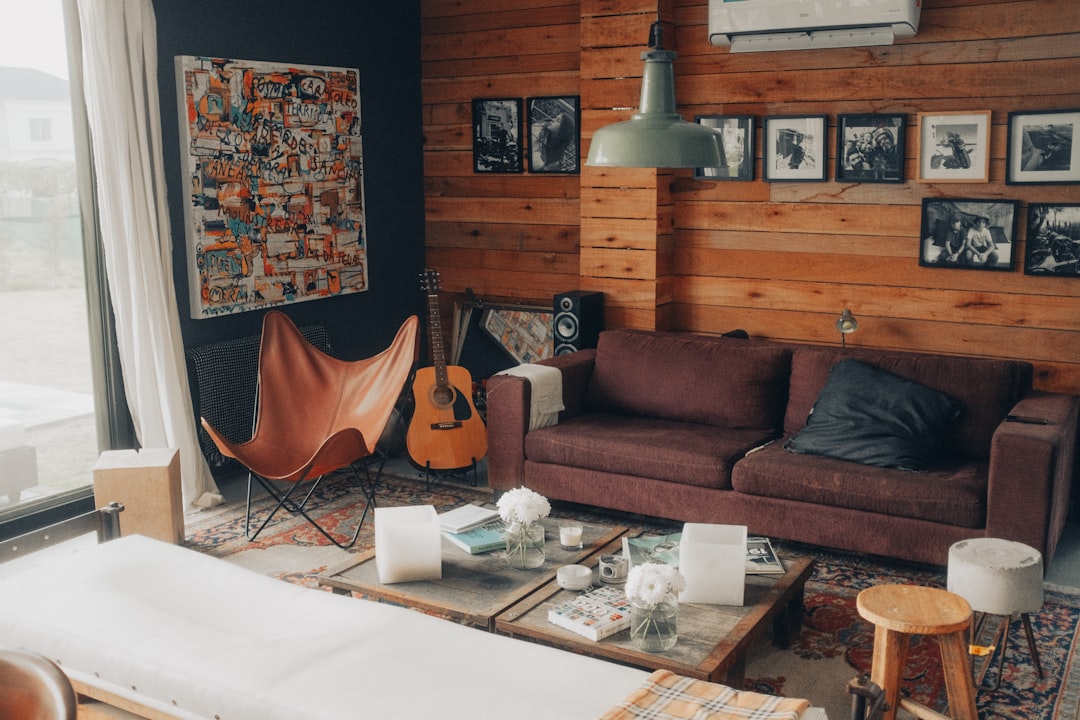
Crucially, don’t commit to a material or size until you’ve finalised your living room layout plan. An ottoman destined for the centre of a conversational grouping needs a different profile and finish than one tucked permanently under a console table by the window. Sketch it out, mark the traffic flows from the main door to the kitchen, and see where the piece will actually live. That extra step prevents buying a 90cm cube that blocks the path to the balcony or a low-slung option that disappears awkwardly beside your sofa. Once you’ve reconciled these priorities—storage for BTOs, hardy fabrics for pets, lightweight designs for rentals—your choice narrows to a few suitable options that work for your specific space, not just in theory.