
In a four-room BTO, the living room is often a precise 20 square metres — a figure that dictates the maximum depth of every armchair and console table you can bring in. Resale flats, especially those built in the 1980s, present a different puzzle: you might find an awkward column right where a TV console should go, or a window that forces the sofa into a specific corner. Condo layouts typically merge living and dining into one 25-square-metre zone, which means your accent chair can’t just face the television; it has to hold a visual conversation with the dining set six feet away.
Material choice here isn't just about aesthetics; it's a direct response to the climate. With humidity stabilising above 80% year-round, that linen-look fabric you love might develop a faint mustiness by the end of its first wet season. Performance velvets and treated leathers become practical considerations, not just luxury upgrades — they resist moisture absorption and are easier to wipe down in a space that sees constant use. Natural wood legs should be properly sealed; otherwise, you risk warping or white mould spots in the joints.
Landed property zones offer more freedom for dedicated seating areas, but they introduce another layer of decision-making. A chair in a dedicated reading nook off the main living hall can afford to be softer and more enveloping, while a piece meant for the central gathering space still needs structured support for longer conversations. The scale shifts, too — a high-ceilinged terrace house can comfortably accommodate a taller wingback chair that would feel overwhelming in a standard HDB.
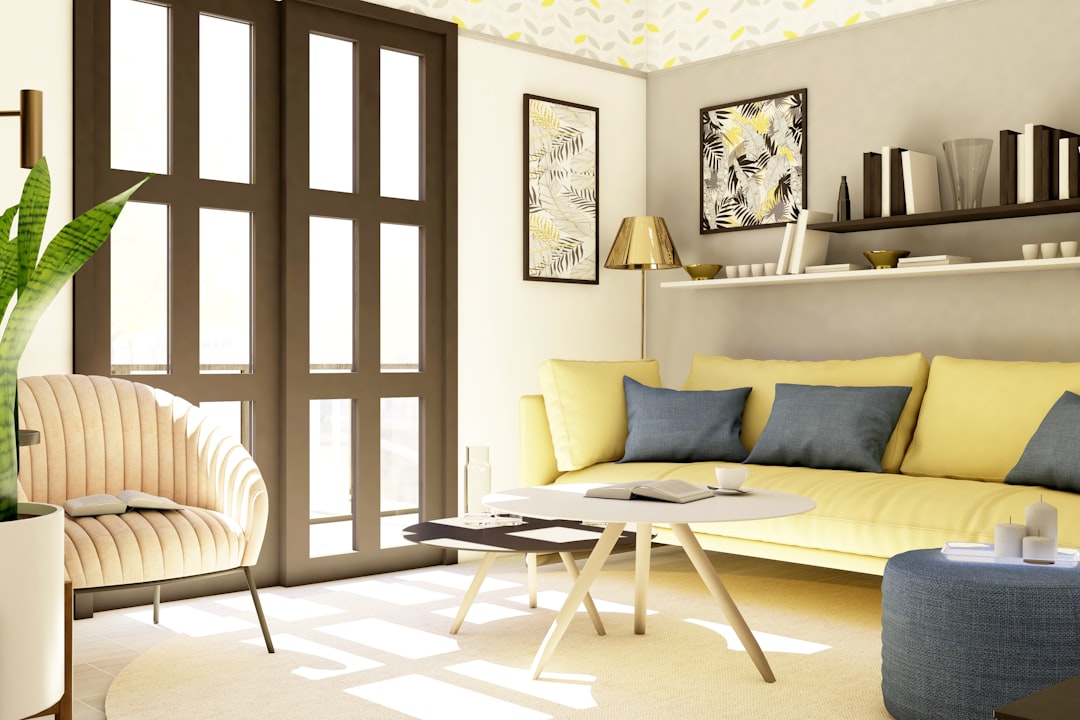
Ultimately, your living room’s provenance dictates its furniture grammar. A resale flat’s quirks demand modular solutions, while a BTO’s blank canvas rewards precise planning from the outset. It’s worth measuring not just the floor space, but also the path from the lift lobby to your front door — that narrow turn will determine what you can actually get inside.
A chair that fits perfectly in a showroom can become a logistical nightmare in a Pasir Ris HDB lift lobby, its journey ending at a door frame it can't clear. The first, non-negotiable filter is width: standard HDB door frames measure around 780mm, so any chair wider than 75cm demands a second thought and a measuring tape. This isn't just about delivery day; it's about future flexibility, the ability to shift the piece for a deep clean or to make space for visiting relatives during the festive season. Ignoring this dimension turns a considered purchase into a permanent, immovable fixture.
Material choice in a local home is less about aesthetics and more about defence. For households with pets or young children, a performance fabric like Crypton or a treated velvet is a practical necessity over absorbent cotton or linen. These engineered textiles repel spills and resist stains from paw prints or toddler snacks, meaning the chair stays in the living room instead of becoming a source of constant anxiety. It’s a simple trade-off: you sacrifice a bit of that natural fibre feel for a chair that actually gets used.
Consider the space underneath. Chairs with tapered legs or a clear, raised base are a subtle win for modern maintenance, creating a clear path for a robot vacuum to navigate. Skirted designs or pieces that sit flush to the floor trap dust bunnies and require manual moving—a minor annoyance that adds up in a weekly cleaning routine. Similarly, weight capacity is a spec that’s easy to overlook until it’s tested. Accounting for multi-generational use means considering not just a single adult, but the possibility of two children piling onto grandpa’s lap, demanding a structure rated for at least 120kg.
Ultimately, these aren't luxury features but fundamental adjustments for how we live. A chair’s success here is measured by how quietly it endures the humid climate, the occasional curry spill, and the constrained floor plans that define our homes—becoming a centrepiece through resilience, not just style.
The humid air in a Tampines condo can turn a bargain frame into a twisted mess within a year. You'll want kiln-dried hardwood, like solid rubberwood or oak, which has been baked to stabilise its internal moisture. This process prevents the wood from absorbing Singapore's ambient humidity and warping, a common failure point for cheaper softwood frames. That structural integrity ensures the chair won't develop a wobble or uneven legs, even parked beside a west-facing window. It's a non-negotiable foundation; without it, no amount of cushioning will save the chair.
High-resilience foam with an Indentation Load Deflection rating of 36 or higher is the only type that bounces back properly in our heat. Lower-density foams collapse under constant use, creating permanent body-shaped hollows that feel like sitting in a dish. This isn't about initial softness—it's about the foam's ability to retain its shape and support after years of daily use in a 4-room BTO living room. Cheaper polyurethane will flatten, leaving you perched on the wooden frame itself, which is a sure path to discomfort. The right foam feels consistently supportive, whether you're reading for an hour or hosting guests.
Down and feather blend cushions offer a luxurious sink-in feel, but they demand a specific ritual in this climate. The fill clumps and compresses with humidity, requiring a thorough fluffing at least once a week to redistribute the material. If you neglect this, the chair develops hard, lumpy patches that defeat its purpose entirely. For many busy homeowners, that's a commitment they simply won't keep, leading to a prematurely shabby-looking centrepiece. It's a high-maintenance choice that only suits those willing to put in the regular work.
East or west-facing windows in condos around Bedok or Tanah Merah deliver intense, direct sunlight that bleaches most fabrics within months. The solution is to look for tight weaves and solution-dyed synthetics, where the colour is embedded in the fibre itself before it's spun into yarn. This makes the fabric inherently resistant to UV damage, so that vibrant teal or charcoal grey won't turn patchy and pale. Performance fabrics like these are worth the premium, as recovering a chair is often more costly than the initial purchase. They shrug off spills, too, which is a bonus for any living room that sees regular use.
The real test is how all these components work together under sustained local conditions. A perfect frame paired with fading fabric still results in a chair you'll want to hide in a corner after a year. Buyer must assess the complete package: the wood's stability, the foam's density, and the fabric's technical specs, not just the aesthetic. This holistic check is what separates a durable investment from a temporary decor piece that deteriorates visibly. It’s the difference between a chair that lasts a decade in your HDB and one that becomes an embarrassment by its second National Day.
The hidden structure determines how the chair feels and holds up over years. A sturdy hardwood frame resists wobbling and maintains its shape under regular use. A quality suspension system, like sinuous springs or webbing, provides responsive cushioning that won't sag. This durable foundation is key for consistent, lasting comfort.
True long-term comfort in an accent chair hinges on proper back support. Look for chairs with a contoured backrest that aligns with your spine's natural curve. Adequate lumbar support prevents slouching and reduces fatigue during extended sitting. This structural feature is more crucial for comfort than cushion softness alone.
The chair's proportions must match your body for all-day usability. An ideal seat depth allows you to sit back with your back supported while your knees comfortably bend at the edge. Correct seat height ensures your feet rest flat on the floor, promoting healthy circulation. A mismatch here can lead to constant shifting and discomfort.
A perfectly proportioned accent chair can still feel wrong if your feet don’t touch the floor. This is a frequent oversight in Singapore, where a standard 550mm seat depth — common for locally sourced or built-to-order pieces — leaves many shorter residents perched uncomfortably on the edge. That elegant high-back wing chair becomes a daily nuisance when you can’t lean back without your legs dangling; it’s a dimension that’s easy to miss on a showroom floor but glaringly obvious during a two-hour Netflix session in your Tampines flat.
Delivery logistics are another common pitfall, especially for those in older walk-up HDB blocks around neighbourhoods like Eunos or Bedok. Buyers often fall for a statement armchair only to discover its assembled width won’t clear the final flight of stairs. A piece that requires complete disassembly for delivery, or one that’s simply too bulky for a tight stairwell, can turn an exciting purchase into a costly logistical headache. It’s a practical check that trumps aesthetics every time.
Material selection, while often focused on colour and texture, needs to account for local living realities. Light-coloured linens or untreated cottons might look sublime in a showroom, but they’re a recipe for permanent stains from curry splash or kopi-o spills in a household that eats in the living room. Similarly, non-breathable materials or certain dense weaves can trap humid air during the monsoon season, leading to a perpetually damp feel. Performance fabrics like Crypton or treated velvets often prove wiser for the long haul, resisting both moisture and stains without sacrificing style.
The real test for any living room piece isn’t how it looks on delivery day, but how it holds up through the routines of a Singaporean home — the afternoon downpours, the spontaneous suppers, the need to simply relax in a space that’s truly your own. Getting the fundamentals of size, access, and material wrong means you’ll be shopping again far sooner than you’d planned.
A photograph of a velvet accent chair can’t tell you if the cushioning will feel like a rock after twenty minutes, or if the arms are the right height for your grandmother to push herself up. That’s the sort of detail you settle in a showroom, not on a screen. For a piece meant for long-term comfort, committing based on online renders alone is a gamble; you’re buying a pixelated promise, not a physical object you’ve truly experienced. Plan to spend at least fifteen minutes sitting in any chair you’re serious about. This isn’t a quick perch. It’s the time needed to notice if the lumbar support actually aligns with your spine, or if the seat depth leaves your knees dangling uncomfortably. In the controlled lighting of a showroom at Joo Seng or Tampines, you can properly assess the fabric’s true colour and texture—whether that performance velvet is cool and smooth, or if the bouclé is softer than you imagined. You’ll also feel the actual heft of the piece; a solid rubberwood frame has a substantial, reassuring presence that a lightweight alternative simply won’t. This physical test is especially critical for multi-generational households. A chair might look stunning, but can an elderly parent rise from its depths unaided? The seat height, the firmness of the cushion, and the stability of the armrests become practical safety considerations. You can’t gauge that from a product description. Finally, a showroom visit lets you inspect the quality of assembly and finish up close. You’re checking for consistent stitching, the smoothness of reclining mechanisms, and how the joints are fastened. It’s about seeing the piece as a complete, three-dimensional object in a space, which often reveals proportions that a staged product shot cleverly obscures. If you’re comparing options, it’s worth making the trip to
browse the living room collectionin person.
The delivery team will leave your new accent chair at the ground-floor porch of your landed house — it’s your job to get it inside. Standard two-man delivery works for most condos with lift access, but navigating narrow staircases in a semi-detached home or a walk-up shophouse is a different story; you’ll need to confirm ground-floor staging, which means you’re responsible for the final move. This isn’t just about logistics — it’s about planning your renovation schedule, as you can’t have a bulky crate blocking your Pasir Panjang porch during the monsoon.
Assembly is another checkpoint, particularly for imported pieces. Many retailers offer assembly-included service, but you must verify it’s stated in writing, especially for chairs with complex swivel bases or reclining mechanisms. An unassembled box in your 4-room BTO living room becomes a weekend project you didn’t budget for, and missing hardware often means a weeks-long wait for replacement parts from overseas.
Warranties reveal where a retailer stands behind its product. For Singapore’s climate, frame integrity coverage for at least three years is non-negotiable — the constant humidity stress on joints and fasteners is a silent killer of furniture. Fabric warranties, however, are often a minefield of exclusions; they’ll typically cover manufacturing defects but explicitly rule out accidental stains from kopi-o or curry, which are the primary hazards in many homes. A five-year frame warranty with a one-year fabric guarantee is a common, and frankly reasonable, split.
That fabric clause makes a performance fabric like Crypton or a treated velvet a practical choice, not just an aesthetic one. The real test of a warranty isn’t its length but its clarity — a vague promise of “craftsmanship” is less useful than a specific document outlining what’s covered, for how long, and the process for claims. Keep that document filed, not tossed with the packaging.
The questions that surface in showroom aisles and online forums are rarely about aesthetics. They’re practical, born from lived experience in a 4-room BTO or a 1990s condo near Bedok MRT. Here’s how those common concerns translate into material and dimension choices for an accent chair.
Does velvet work in Singapore’s humidity? It can, provided you skip traditional cotton velvet entirely. The answer is a performance velvet blend, typically with polyester or nylon, backed by a moisture-wicking lining. This combination resists the damp, sticky feeling that ruins fabric in many homes; it’s a texture that stays cool to the touch even when the afternoon sun hits your Tampines living room window.
Which chairs actually fit a narrow HDB balcony conversion? Look for compact frames under 700mm in width. Anything broader swallows the space, turning a potential reading nook into an obstruction. An accent chair with a slender profile and perhaps a slightly taller back can create a sense of enclosure without the bulk, making a 2.5 metre-wide converted space feel intentional, not cramped.
Can foam cushions survive the local heat? Standard low-density foam will pancake in a year. The solution is high-density foam—it’s the core that maintains shape—wrapped in a layer of polyester fibre. This wrap acts as a buffer against the constant thermal expansion and contraction, preventing that dreaded permanent dent where you always sit.
Is wood from Indonesia or Vietnam suitable for our climate? Absolutely, but the treatment is everything. Rubberwood or acacia from these regions must be properly kiln-dried and finished with a sealant that fights moisture absorption. Without that step, you’re inviting warping or mould in our tropical stability, no matter how attractive the price point initially seems. For a curated range that addresses these specific local considerations, you can browse the accent chair options at Megafurniture.
The final step before you head to a showroom is often the most overlooked, and it’s where a tape measure becomes your most valuable tool. You might have found the perfect accent chair online, only to realise it won’t fit past the main door of your 4-room BTO in Tampines or clear the tight corner into your living area. Measure your passage route meticulously—not just the final doorway clearance, but also the lift interior dimensions and any stairwells if you’re in a low-rise walk-up or landed property. That beautiful, high-backed wing chair you’ve saved might be a logistical nightmare for delivery crews navigating Eunos’ older HDB blocks.
With your precise spatial constraints in hand, compile a definitive shortlist of just two or three models. This forces a ruthless focus on your room’s primary function. Is it for a dedicated reading nook beside a bookshelf, requiring deep seats and good lumbar support? Is it occasional guest seating that needs to tuck under a console table when not in use? Or is it part of a TV-viewing arrangement, where height and sightlines relative to your sofa matter more than anything? A chair that tries to do all three usually excels at none.
Now, allocate your total budget with clear-eyed realism. The price tag you see is rarely the final amount; you must factor in delivery fees, which can add $80 to $200 depending on your neighbourhood and the item’s bulk. For landed property applications, consider potential customisation costs—extending a leg height for a sunken living room, or opting for a performance fabric like Crypton for a chair destined for a pool-facing verandah in a terrace house. It’s wise to keep 10-15% of your total budget in reserve for these incidentals.
This disciplined pre-visit work transforms your showroom trip from a browsing exercise into a confirmation mission. You’ll walk in knowing exactly what dimensions you need, which functions are non-negotiable, and what your true financial ceiling is. You can then assess the shortlisted contenders in person, feeling the weight of a solid rubberwood frame or testing the give of a sinuous spring seat, without being distracted by a warehouse full of alternatives.