Singapore’s humidity doesn’t just make you sweat—it settles into your upholstery. An ottoman placed near a common east-west facing window in a Tampines condo or Bedok HDB faces a daily assault: 80% relative humidity and ambient temperatures pushing 28°C create a prime environment for mould and material breakdown, turning a plush seat into a science project within a few seasons.
That’s why the fabric’s technical performance matters more than its initial look. You’ll want to test for moisture-wicking linings, often a synthetic backing that actively draws dampness away from the surface, preventing that perpetually clammy feel. Colourfastness is non-negotiable; the intense UV exposure from those same windows will bleach a vibrant teal or mustard velvet to a sad, washed-out grey if the dye isn’t locked in. Performance fabrics like Crypton or Sunbrella, while an investment upfront, are engineered for this exact scenario—they resist stains, repel moisture, and their colours are typically rated for high UV exposure.
Forget about delicate linens or raw silks; they’ll degrade quickly. In many homes, the practical choice leans toward solution-dyed acrylics or tightly woven performance polyesters that can handle both spill-prone weekends and the constant solar glare. A bouclé might feel luxurious, but check its fibre content—a wool-blend bouclé in a humid, sun-drenched spot is a recipe for fading and potential moth interest.
Material breakdown often starts invisibly, with the internal foam cushioning crumbling into dust or the wooden frame warping from absorbed moisture. It’s a slow process you only notice when the ottoman loses its shape or develops a permanent musty odour. Prolonging your piece’s life means looking past the swatch and asking retailers about the full construction—high-resilience foam cores and treated hardwood frames should be standard for anything meant to last a decade in our climate.
When evaluating options, place a sample fabric in direct sunlight for a few weeks; if the colour shifts, imagine it after five years. That east-west sun is relentless, and your upholstery needs to be too.
The kopi-o stain on the beige linen ottoman is a rite of passage in many Singapore homes—it’s not a matter of if, but when. Daily life here delivers a specific set of challenges: spilled teh tarik, buah long-long juice from the wet market, and the relentless curiosity of a Singapore Special dog or a mischievous cat. Natural fibres, while breathable, often surrender to these assaults, leaving a permanent map of your household’s activity.
Your first line of defence is the fabric’s composition. Prioritise tightly woven synthetics like polyester or olefin, or solution-dyed acrylics. These materials are engineered to resist absorption; the stain sits on the surface, giving you those crucial extra minutes to blot it before it sets. A solution-dyed fabric has colour pigment baked into the fibre itself, so fading from our equatorial sun isn’t a concern. It’s a practical choice that forgives the occasional accident.
For households with pets, the weave is just as critical as the stain resistance. Cats’ claws and small dogs’ nails will find a loose weave or a looped texture like a cheap bouclé and snag it instantly. You need a high rub count—a measure of durability—and a tight, flat weave. Performance velvets or tight canvas weaves are good bets; they offer little purchase for claws and clean easily with a damp cloth. A low rub count fabric in a home with an active pet will look frayed and tired within months.
This isn’t about sacrificing aesthetics for function. Many of these performance fabrics now come in rich colours and subtle textures that rival natural materials. The goal is to find one that doesn’t force you to police every snack or play session. An ottoman should be a workhorse, not a museum piece—especially in a 4-room BTO where it might also serve as extra seating during gatherings or a footrest for movie nights. Your choice ultimately hinges on whether you prefer a piece that looks pristine but demands constant vigilance, or one that quietly endures the beautiful chaos of daily life.
That 12 sqm HDB living room can't accommodate a standard coffee table and a large ottoman without a fight. The sweet spot for width typically sits around 80 centimetres, a scale that leaves a clear walkway from the main door to the sofa. Anything wider starts to dominate the floor plan, forcing residents into an awkward sidestep shuffle every time they cross the room. This dimension also allows for a companion side table or a slim console against the adjacent wall, maintaining a sense of balance. Ignoring this scale is the fastest route to a room that feels perpetually cluttered, no matter how much you tidy.
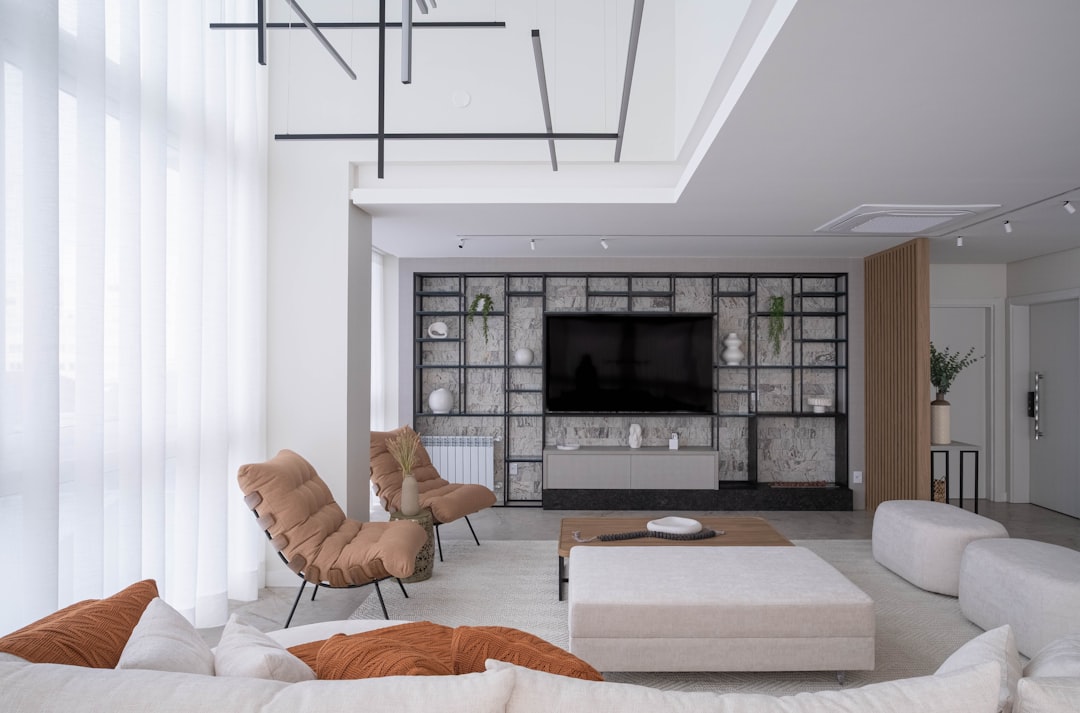
In a landed property hall or a generous condominium living area, a modest ottoman simply gets lost. Here, you can confidently anchor the seating area with a statement piece stretching 120 centimetres or more. This larger footprint provides a substantial surface for trays and drinks when entertaining, and its visual weight helps to define a spacious open-plan zone. It becomes a central hub rather than an afterthought, complementing a larger sectional or pairing of armchairs. The extra real estate invites you to actually use it, not just walk around it.
For BTO owners facing a stark lack of built-in cabinetry, an ottoman's form must follow a very specific function: storage. A hollow model with a lift-up lid becomes the default home for spare blankets, board games, or that excess of guest slippers. This turns a passive piece into an active organisational tool, effectively adding square metres of concealed space in a room that has none to spare. It's a practical compromise that many new homeowners overlook in favour of style, only to regret it a season later when clutter accumulates.
Always measure the critical walkways first—from the doorway to the balcony, or from the sofa to the television console. You'll need at least 60 centimetres of clear passage, which immediately dictates the ottoman's maximum permissible size and placement. In a narrow HDB layout, this often means positioning it perpendicular to the sofa, not parallel, to preserve that crucial circulation route. Getting this wrong creates a daily obstacle course; getting it right makes the room feel intentionally designed, not just filled.
The ottoman shouldn't visually overwhelm the sofa it serves, nor should it look like a forgotten footnote. A good rule is for its width to be roughly two-thirds the length of the sofa's seating area, creating a harmonious relationship. In a compact setup with a two-seater, this might mean a square 70cm model, while a larger family sofa can handle a rectangular 90cm one. It's this proportional awareness that separates a cohesive living room scheme from a collection of mismatched pieces bought in isolation.
The phrase 'premium fabric' on a label is about as meaningful as 'new and improved' on a detergent bottle. In a humid climate, it’s the technical data behind the marketing that determines whether your ottoman fabric will last five years or start pilling and fading after five months.
Ignore the generic claims and look for the numbers. For an ottoman facing daily use from feet, kids, and pets, a Martindale rub count above 25,000 is a solid indicator of abrasion resistance. Certification matters, too; an OEKO-TEX® Standard 100 label means the textiles have been tested for harmful substances, a sensible check for any piece in a home with young children or allergies. These are tangible, third-party validations that move you beyond a seller’s subjective ‘premium’ tag.
Inspect the construction with the same scrutiny. Run a finger along the seams on a storage ottoman and check the stitch density—it should be tight and consistent, ideally around 8 to 10 stitches per 10cm. A loose stitch line is a future point of failure, especially when the compartment is regularly stuffed with heavy blankets or toys. The zipper is another tell; a robust, two-way metal runner will glide smoothly under load, while a flimsy plastic one will likely jam or break just when you need to access that extra cushion during monsoon season.
That attention to detail often separates a piece that merely looks good in a showroom from one that endures in a bustling 4-room BTO living room. It’s the difference between buying furniture and making an investment that won’t demand a replacement in a few short years.
" width="100%" height="480">Selecting ottoman fabric: A durability test for Singapore living roomsA buyer in a Serangoon condo falls for a light linen ottoman — it looks perfect in the showroom light, a clean centrepiece for the new sectional. Six months later, it's a tapestry of paw prints and stubborn stains, the fabric pilling from daily cat naps. Aesthetic choices often collapse under Singapore's functional realities; that linen piece belongs in a child-free, pet-free show flat, not a household with actual living happening on it.
Material and construction are just as critical, yet overlooked in favour of style. Many buyers neglect leg height and base material, selecting pieces that sit flush on the floor. In a humid corner of a ground-floor Bukit Timah terrace, or even in a poorly ventilated HDB common room, that direct floor contact traps moisture. The result is a ring of mould on the ottoman's underside within a season — a slow ruin you won't see until you move it for spring cleaning.
Scale and logistics present another frequent error. An oversized, solid wood ottoman might suit the dimensions of a semi-detached living room, but getting it there is a separate battle. Condo lift dimensions are a notorious bottleneck; buyers forget to check their building's lift panel size and staircase turns before ordering. That beautiful piece then gets stuck in the loading bay, incurring additional hoisting fees or, worse, a refused delivery.
The pitfall is a sequence of small oversights: choosing for a single moment in a showroom instead of the years in a flat, measuring the room but not the route to it. Function here isn't an abstract ideal — it's woven into the fibre content, the fifteen centimetres of air under the legs, the precise width of the Eunos condo lift door.
A fabric swatch book under showroom lights tells you almost nothing about how a material will handle a year of Singaporean humidity, or the way afternoon sun bleaches a favourite armrest. That’s the gap the Joo Seng showroom bridges—it’s a controlled environment where you can put samples through a localised stress test. You can feel how a performance velvet responds to a simulated condensation cycle, or watch how a linen-look polyester holds its colour under a focused lamp meant to mimic our intense equatorial light. This moves the decision from a visual guess to a tactile experiment. The value extends to construction, particularly for workhorse pieces like storage ottomans. Placing a few models side-by-side reveals differences a product page can’t: the heft of a plywood frame versus a lighter alternative, the precise glide of a soft-close hinge, or how much clearance you actually get under a tufted lid. You’re comparing the engineering, not just the imagery. For a piece that will see daily use as a footrest, occasional seat, and hidden storage for board games or spare bedding, these details define its lifespan. Staff there can translate those observations into practical terms, especially regarding warranty coverage. Ask pointedly about seam splitting on frequently stretched fabrics, or frame integrity for ottomans regularly used as impromptu seating. Their explanations typically clarify what’s considered normal wear in a busy household versus a manufacturing defect—a crucial distinction for buyers planning to keep a piece through several lease renewals or a full BTO cycle. It turns a generic policy document into a relevant conversation about your specific living room habits. That direct engagement is difficult to replicate online. You leave with a confirmed sense of a material’s hand-feel and a clearer understanding of what your investment covers, which can streamline choices across an entire
living room furnitureproject. It shifts the calculus from hoping a fabric will endure to knowing how it was tested.
Frequent use demands a fabric that can withstand constant friction from sitting, resting feet, and movement. Look for textiles with a high Martindale rub count, ideally over 25,000 for heavy domestic use. Tightly woven fabrics like microfiber or certain robust wovens are excellent, as they resist pilling and maintain a smooth surface despite daily wear.
For households with active families, fabric durability must account for claws, spills, and rough play. Tight, short-loop velvets or textured weaves are excellent as they resist snagging and scratching. Opt for darker patterns or prints that cleverly camouflage everyday dirt and minor stains between cleanings.
Spills are inevitable in a living space, making easy maintenance non-negotiable. Crypton or similar performance fabrics offer superior stain, moisture, and bacterial resistance, allowing for easy wipe-downs. Removable, machine-washable covers are another practical solution, providing a simple way to refresh your ottoman after any accident.
Singapore's intense sun and high humidity can quickly degrade fabrics. Prioritize solution-dyed acrylics or UV-resistant synthetic blends, as their colors are locked in and resist fading. These materials also inherently repel moisture, preventing mold and mildew growth in the damp climate. This ensures your ottoman's appearance and integrity last for years.
The delivery crew will stop at the foot of the staircase—that’s when the extra charges begin. For walk-up HDB flats, confirm staircase fees upfront; it’s a line item that often appears only on the final invoice, and for a bulky ottoman or storage console, that can add $50 to $150 depending on the floor and item weight. Clarify assembly terms, too: original equipment manufacturer (OEM) assembly, usually performed by the retailer’s own team, tends to follow a standardised process, while third-party contractors hired by some marketplaces might not have specific training for your piece.
Singapore’s warranties are precise, and their exclusions are where you’ll find the fine print. Sun exposure is a common culprit; many guarantees for fabrics like linen, cotton, or even some performance velvets explicitly exclude fading from UV rays, which is a genuine concern in east-facing living rooms in Bedok or Tampines. Don’t assume coverage—seek written clarification on what ‘defect’ means, and keep that document filed with your receipt.
Lead times are rarely static, especially for imported items. During the Q4 renovation peak, from October onwards, expect delays as logistics networks clog; a quoted four-week window can easily stretch to eight. If you’re coordinating a full room refresh for a BTO move-in, this timing is critical—order your anchor pieces, like that TV console or accent chair, well before the painters finish.
For assembly, there’s a tangible difference between a team that does this daily and one that doesn’t. A misaligned drawer runner or a slightly wobbly leg often traces back to an unfamiliar installer rushing through the instructions. It’s worth asking who’s showing up with the toolkit. Finally, understand the warranty claim process: does it require original packaging (which you likely broke down for the weekly recycling), and will a technician come to your 4-room flat in Eunos, or must you haul the item back to a service centre? The answers dictate the real cost of ownership long after the delivery truck has left.
The questions that come up at showrooms aren't about obscure trends — they're about humidity, toddlers, and the practicalities of daily life. These are the real queries that shape a purchase.
Does velvet work in non-aircon living rooms? It doesn't. While performance velvet can resist spills, the plush pile itself is a heat trap; in a sun-facing HDB living room or a landed property's breezy verandah, it'll feel uncomfortably warm for most of the year. You're better with a linen-look or a flat-weave performance polyester.
Best fabric for toddlers? Crypton or a similar performance polyester is the standard answer for a reason — it's engineered to block stains at the surface. But for the daily reality of juice spills and sticky fingers, a darker, textured pattern hides the interim mess between cleanings better than any light, solid colour can.
Can ottoman replace coffee table? Only if you add a sturdy, flat-top tray. The uneven surface of most upholstered tops makes setting down a drink precarious, and without that rigid layer, you'll dent the padding every time you reach for the remote. Look for a tray that covers at least two-thirds of the ottoman's surface; that's what turns it from extra seating into a functional centrepiece.
How to clean without damaging fabric? Use the brand-specific cleaner recommended for that particular performance fabric; generic solutions can degrade the protective topcoat. For most spills, a damp microfiber cloth with a dab of the proper solution works immediately — letting anything sit, even water, is the real enemy in our climate.
The fabric swatch you loved under showroom halogens can look oddly grey in your east-facing living room’s morning light. That’s why the final 48 hours before purchase are for home trials, not more scrolling — your space holds the definitive answers your research can’t.
Cross-reference your notes on the room’s micro-climate and traffic. A plush velvet ottoman for a rarely-used corner in an air-conditioned Tampines condo is a low-risk luxury; the same piece placed in the main walkway of a humid, fan-ventilated Joo Seng HDB is a future stain magnet. Observe how afternoon sun from your Bedok block’s common corridor hits that spot, accelerating fade on some dyes. Primary use dictates everything — an ottoman that doubles as a coffee table for a family of four needs a hardier top than one serving as occasional footrest in a couple’s lounge.
Never trust listed dimensions alone. Unroll your tape measure and mark the ottoman’s footprint on your floor with masking tape, accounting for all walkways. In a typical 4-room BTO living room, you’ll need at least 900mm clearance around a central piece; a bulky storage ottoman can easily disrupt the flow to the balcony or dining area. This physical mock-up often reveals that the 80cm cube you wanted leaves no room for the robot vacuum to pass, forcing a downsizing to 65cm.
Bringing fabric samples home is non-negotiable. Pin them to the intended spot and live with them for two full days. Watch how that linen-cotton blend looks under your warm-white ceiling LEDs at night versus the cool natural light from your Aljunied unit’s window. Spill a few drops of water on the performance fabric to see how it beads — or doesn’t. This final, tactile step moves the decision from speculative to certain, ensuring the piece you order is the one you’ll keep.