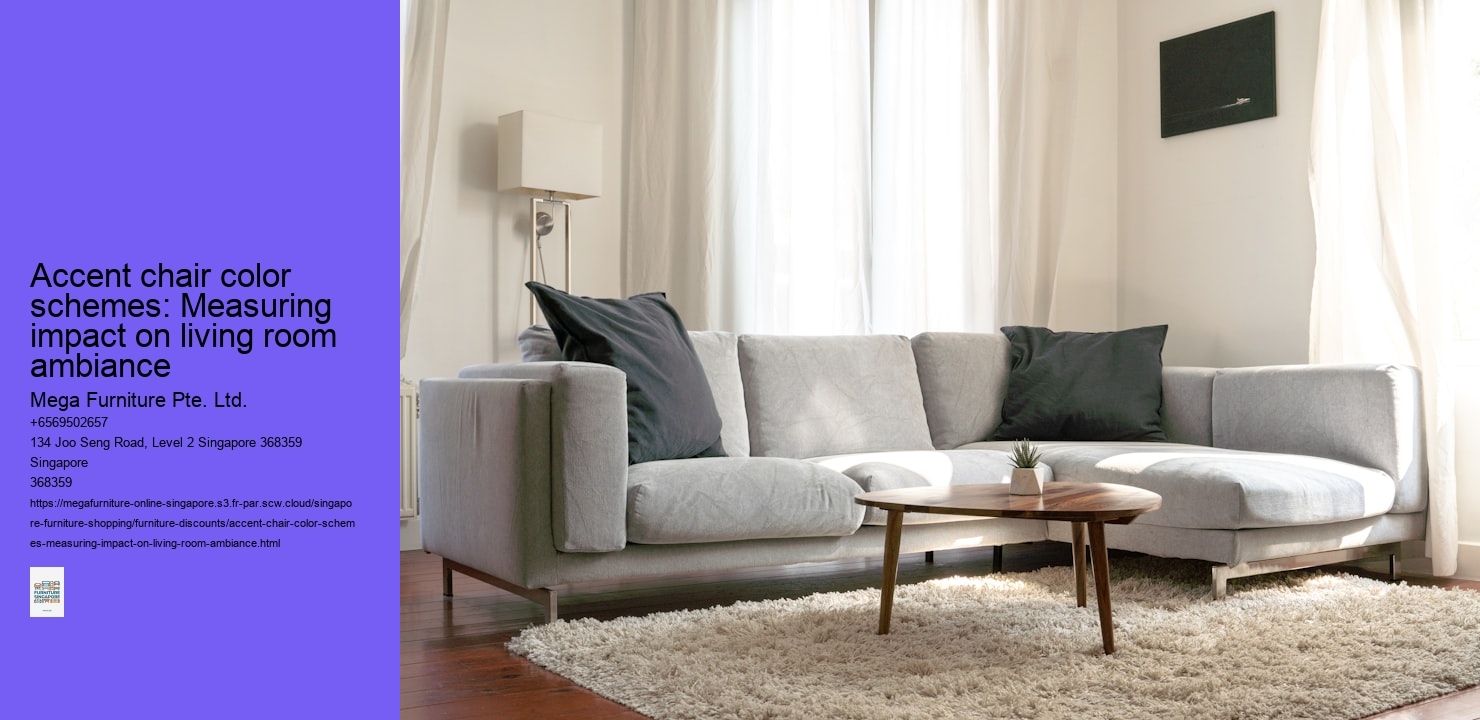
In many Singapore living rooms, the wall colour is a default decision – a safe backdrop of beige, grey, or white that buyers often accept without question. The impact of this choice only becomes clear when you introduce an accent chair, its hue either fighting the space or finally giving it a focal point. A warm tan leather chair, for instance, can turn a cool grey feature wall from sterile to sophisticated, while a cool teal velvet might just get swallowed up by a similarly-toned beige.
The interaction hinges on light reflectance value, or LRV, a measure of how much light a colour bounces back. In a north-facing BTO unit with limited direct sun, a wall with a low LRV – a deep charcoal, for example – will absorb precious ambient light. Pair that with a dark accent chair and the whole corner can feel like a cave, even at noon. The trick is to use the chair to correct the room’s light balance; a high-LRV cream or pale oak frame beside that dark wall acts like a light source itself, lifting the entire visual weight of the area.
Consider the common concrete-look feature wall in newer condos. Its inherently cool, mineral tone creates a stark canvas that many find intimidating. That’s precisely where a chair in a warm, rich leather – cognac, saddle, or oxblood – does its best work. The contrast isn’t jarring; it’s deliberate, grounding the industrial feel with organic texture. Conversely, a cool grey linen chair against that same wall often just looks unfinished, as if someone forgot to add the final layer of personality.
For the typical four-room HDB with walls in a mid-range beige, the LRV is usually forgiving but the tone can be ambiguous. Is it a warm beige or a cool greige? Your chair material answers that. A walnut-framed chair with olive green upholstery pulls the beige toward earthy warmth, while a chair with chrome legs and slate blue fabric pushes it toward contemporary cool. It’s less about matching and more about using the chair’s colour to define the room’s entire temperature.
Ultimately, the safest neutral wall isn’t always the most liveable one. A buyer might spend weeks choosing a chair’s fabric but only minutes on the paint swatch for the wall behind it – that’s a missed opportunity to orchestrate the room’s light.
In a typical landed property, where the living room opens directly to the garden, an accent chair faces a dual assault: damp air rolling in and a wet Labrador shaking off beside it. That’s the real test for any fabric, and it’s where your material choice splits decisively based on your home type and lifestyle.
For landed homes with pets, treated synthetic weaves are the pragmatic favourite. Performance velvets and Crypton-style fabrics resist spills and stains—coffee, mud, or worse—and their dense construction repels pet hair better than loose weaves. They’re designed for wipe-downs, which is essential when your terrier claims the chair after a rain chase. Natural linen or cotton, while breathable, becomes a liability here; they absorb moisture from the air and hold onto odours, encouraging mould in the constant 80% humidity.
Condo dwellers face a different, subtler challenge. Enclosed, air-conditioned spaces without consistent cross-ventilation create pockets of stagnant air, especially behind furniture pushed against a wall. In these conditions, even a beautiful wool bouclé can develop a musty dampness at the back after a few months, a problem you won’t notice until the chair is moved during spring cleaning. The risk isn’t just spillage, but ambient moisture that settles into fibres without ever seeing direct sunlight.
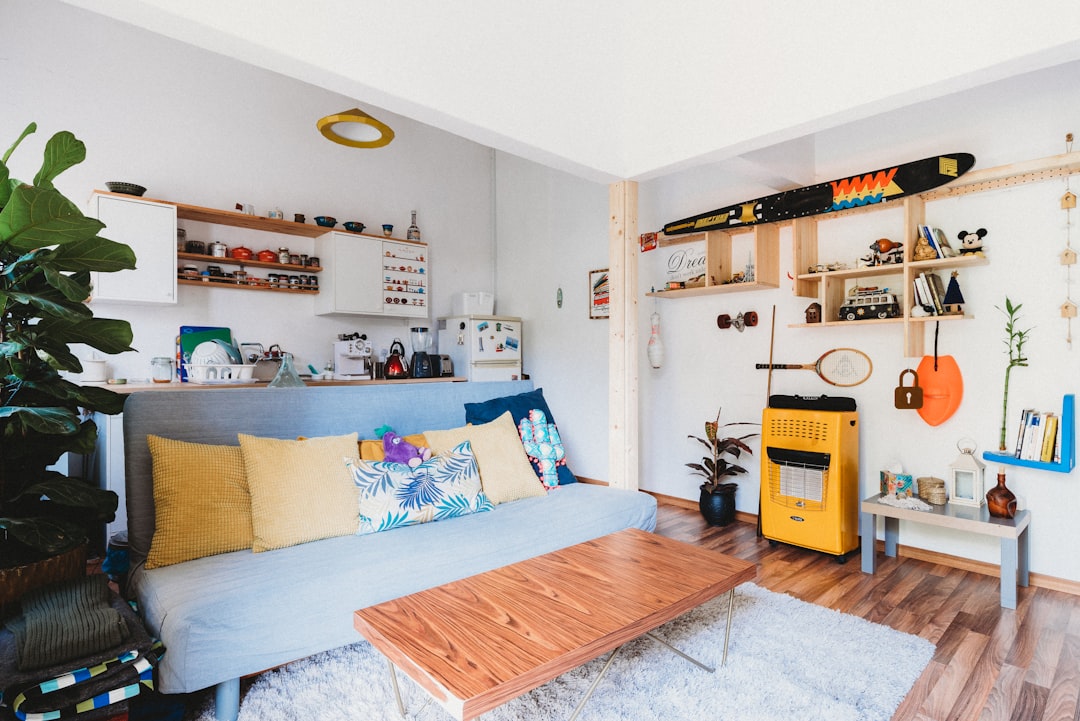
The solution isn’t a single miracle fabric, but matching the fibre to the airflow. For a well-ventilated landed home, a robust, stain-resistant synthetic is your workhorse. In a sealed condo, you need materials that manage moisture *and* can handle the occasional aircon-induced chill without deteriorating; some performance velvets and tightly-woven polyesters handle this microclimate better than untreated natural fibres. It’s less about luxury feel and more about what won’t develop a fungal colony by year three.
Ultimately, many buyers prioritise colour and silhouette, then regret it when the peach linen chair in their Tampines condo develops grey speckles along the skirt. The humid climate dictates a hierarchy: engineered fabrics first, aesthetics second. You can find chairs that satisfy both criteria, but it requires looking past the showroom sample to the care label and fibre content.
That sleek accent chair in the showroom often becomes a hallway obstruction in a 12 sqm HDB living room. The key is to match the chair's base dimensions to the room's actual traffic flow, not just its square footage. In many four-room BTO layouts, a chair depth exceeding 85cm can block access to the balcony door or make the walkway to the bedrooms feel cramped. Armless designs or chairs with a narrow profile, typically under 75cm wide, leave crucial breathing room. You'll find you can still make a visual statement without sacrificing daily function. It's a simple equation: the chair's footprint should complement the room's circulation space, not compete with it.
Low-profile seating is a non-negotiable for narrow walk-up apartments and many older HDB blocks. A high back or tall wings on an accent chair visually chops a room in half, making ceilings feel lower. Instead, look for chairs with a seat height around 40cm and a back that stays below shoulder level when seated. This maintains a clear sightline across the room, preserving that hard-won sense of spaciousness. The visual weight disappears, letting the colour and texture do the talking. It’s a subtle trick that makes a compact living area feel instantly more organised and open.
Always account for the chair in its "in-use" position, not just tucked against a wall. An accent chair needs space to be pulled out for sitting, which adds at least 30cm to its stated depth. In a tight layout, that often means the chair must live permanently angled in a corner, dictating a specific size and swivel capability. Measure from the front legs of your sofa outward to ensure there's still a comfortable 60cm walking path. Neglecting this operational clearance is how a beautiful piece ends up as a glorified coat rack. Plan for the chair's lived reality, not its showroom pose.
Reserve larger, more sculptural accent pieces for spaces that can truly carry them. A landed property's converted void deck or a generous condo layout with high ceilings has the volume to absorb a bold, oversized chair. In these contexts, a piece with a strong silhouette or dramatic arms becomes a justified focal point rather than an obstacle. The scale of the architecture supports the furniture's ambition. In a standard HDB room, that same chair would simply dominate everything else, making the entire scheme feel off-balance and cluttered.
The perceived mass of a chair matters as much as its actual measurements. A dark, solid-wood frame with thick upholstery feels heavier than a light-toned, leggy design in performance velvet. For compact plans, favour pieces that appear to float—chairs with exposed, tapered legs and minimal base structures. Lighter colours and open sides reduce visual bulk, helping the chair recede when not in use. It's about choosing a design that contributes to the room's ambiance without anchoring the entire space down. This careful management of visual weight is what separates a crowded room from a curated one.
The oversized club chair in the showroom seldom fits the 1.2-metre-wide corridor of a typical four-room BTO flat. It’s a common misjudgement — buyer gets seduced by a deep, enveloping silhouette under warehouse lighting, only to realise it blocks the path to the master bedroom door. That’s just the start of the spatial puzzle. Another frequent error is selecting a trendy, light-coloured velvet for a chair destined for the family TV zone. It photographs beautifully for the first week, but after a season of afternoon snacks and sticky fingers, that blush pink or cream begins to look permanently grubby.
Colour mistakes extend beyond practicality into tonal clashes many don’t anticipate. Singaporeans love a warm wood-tone TV console or have existing parquet flooring with a distinct reddish hue. Plonking a cool grey or stark black accent chair against these warm backdrops can create a jarring visual disconnect, making the room feel disjointed rather than cohesive. The chair ends up looking like an afterthought, not an integrated part of the living room’s story.
The solution isn't complicated, but it requires a bit of old-school legwork. Always bring physical fabric swatches home. This is non-negotiable. View them pinned to your wall at 3 p.m. under the harsh daylight that floods your living room, and again at 8 p.m. under the warm 2700K LED downlights you likely have. That chic olive green can read as murky brown in the evening, and a sunny yellow might turn sallow. Lighting in Singaporean homes is a two-act play, and your fabric needs to perform under both.
Finally, measure not just the chair’s footprint, but its entire sweep. Account for the arc of a recliner or the sideways sprawl of a winged armchair when someone settles in with a book. In a compact living-dining combo, that extra 15 centimetres can be the difference between comfortable circulation and a permanent obstacle course. It’s about respecting the room’s actual lived-in geometry, not just the empty-floor-plan fantasy.
The difference between an accent chair that looks good online and one that feels right in your living room is about 15 minutes of sitting. Photos can’t convey the exact give of a cushion or the firmness of lumbar support—details that matter when that chair will host your weekend reading sessions or become the default seat for guests. For a full-room refresh, committing to a colour like Emerald Green or Mustard Yellow based on a digital swatch is a gamble with your overall scheme; the lighting in your phone or monitor isn’t calibrated to the warm, 4000K LED typical of Singapore homes. That’s where a showroom visit proves its worth. At Megafurniture’s Joo Seng or Tampines locations, you can test the seat depth and back angle of shortlisted models, moving from one to another to compare how each supports your posture. You’ll immediately notice if an armrest is too high for resting a coffee mug or if the velvet finish catches the light in a way that adds depth or flattens the colour. This tactile process eliminates the post-delivery surprise that a chair is purely decorative and not actually comfortable for long periods. Crucially, the showroom’s lighting is designed to mimic residential conditions, giving you a far more accurate preview than any studio shot. An Emerald Green velvet under warm LEDs can read as rich forest or, in some cases, take on an almost teal cast, while Mustard Yellow might skew towards gold or muted ochre. Seeing the actual fabric samples under these lights lets you judge how the hue will interact with your existing wall colour, floor tiles, and natural light from the balcony—critical for ensuring cohesion in a 4-room BTO living room. Beyond comfort and colour, you can assess build quality up close. Run a hand over the stitching, check the stability of the legs on the showroom floor, and examine the finish for consistency. It’s the best way to verify that a piece advertised as solid rubberwood feels substantial and that the performance velvet truly resists a casual stain. For a purchase that anchors a room’s aesthetic, this due diligence is non-negotiable. Consider it a final checkpoint before ordering. You wouldn’t buy a car without a test drive, and the same principle applies to a significant furniture investment meant to last a decade. A trip to
Megafurniture’s showroomturns abstract online browsing into a concrete decision, letting you confirm the scale of a piece and how its material plays with light in real space. It’s the simplest method to ensure your chosen accent chair doesn’t just fill a corner but genuinely enhances the room’s daily function and mood.
A chair in a rich sapphire, amethyst, or brass-finished fabric introduces a layer of luxury and dynamism. These reflective and saturated hues catch light and add a sense of glamour and energy to the living space. They work particularly well in rooms with neutral or metallic decor elements, creating a vibrant yet balanced centerpiece. This scheme effectively transforms the ambiance into one of polished opulence.
Selecting a deep navy, emerald, or charcoal accent chair against lighter walls creates a sophisticated focal point. This approach adds visual weight and depth without introducing competing colors, maintaining a clean and intentional look. The high contrast elevates the room's elegance and modern appeal. It is a powerful way to define a seating area with confidence and style.
An accent chair in terracotta, olive, or ochre introduces a grounded and serene energy to a living room. These colors connect the space to nature, fostering a calming and restorative ambiance. They pair effortlessly with wooden furniture and neutral walls, creating a cohesive and inviting atmosphere. This scheme is ideal for establishing a relaxed, organic feel in the room.
The delivery crew will stop at the foot of the staircase, point to the four flights, and quote you an extra $120. That’s the standard stair-climbing charge for a walk-up HDB resale flat, a non-negotiable reality for older blocks without lift access that can add a surprising sum to your final invoice. For newer BTOs and condos, the hurdle is often the lift itself — many condo lifts have doors narrower than 90cm, requiring disassembly of your new armchair on the spot before it can even reach your floor. Always confirm these clearance dimensions with your retailer before purchase; it’s a detail that turns a smooth delivery into a protracted, frustrating afternoon on the loading bay.
Warranty coverage becomes critical once the furniture is in place, especially for accent chairs destined for harsh Singaporean light. A typical warranty covers frame integrity against manufacturing defects, but fabric fading is a different story. For a west-facing window that blazes with afternoon sun, standard upholstery can bleach within months. You’ll want explicit written confirmation that the warranty includes protection against colour fading, or better yet, opt for performance fabrics like Crypton or Sunbrella from the start — they’re engineered to resist UV damage and stains, which is a practical choice over aesthetic regret.
Assembly services are usually bundled with delivery, but it’s worth verifying what ‘assembly’ actually means. For a complex recliner or a swivel chair with a separate ottoman, it should involve full mechanical testing. The real test comes later, during the warranty period: a robust warranty from a retailer with a physical showroom means you can bring a faulty mechanism to their service centre in Tampines or Joo Seng without arguing over courier logistics. That local presence matters more than a longer-term promise from an online-only seller.
Finally, consider the timeline. Delivery for in-stock items might take a week, but for made-to-order pieces in a specific fabric, you could be waiting eight to twelve weeks. Plan your living room refresh around that, not the other way around. A good retailer will manage these practicalities transparently, leaving you to focus on the colour and form that will define your space.
The most revealing questions about accent chairs don't come from showrooms; they arrive in frantic WhatsApp voice notes from friends who’ve just spotted a hairball on their new linen seat. Here are the real concerns. Can a dark chair work in a low-ceiling HDB? It can, but the silhouette matters more than the colour. A low-profile armchair in charcoal or navy, with legs exposed to show floor, won’t weigh down a 2.4-metre ceiling—a bulky, full-skirted chair in the same hue definitely will. Lean into contrast with a lighter rug or wall. How to clean accent chair fabric in humid weather? Performance fabrics are non-negotiable for many. Look for treated polyesters or solution-dyed acrylics labelled for stain and moisture resistance; they handle spills and the constant 80% humidity without mould becoming a third occupant. For existing chairs, a handheld upholstery cleaner with a fast-drying formula is a worthwhile investment. Best colour to hide cat hair? Mid-tone greys and patterned weaves with flecks of brown or grey camouflage fur best—solid black or white simply highlights every strand. A tightly woven texture, like a performance velvet or a flat-weave wool blend, also prevents claws from snagging. Matching chair to existing dark teak furniture in a landed house. Don’t try to match the wood tone exactly; that often looks forced. Instead, pick a chair with a complementary material—a deep green velvet, a cognac leather, or a chair with blackened metal legs. It creates a curated, layered look rather than a showroom set. For those building out a full scheme, browsing a consolidated
living room furniture collectionhelps visualise these pairings.
The moment before you commit to a colour is often the moment you realise you've been thinking about the chair in a vacuum. It's a single object, but its colour will dictate the entire room's rhythm for years. So stop looking at the swatch in isolation. Instead, organise a physical mood board on your living room floor, using actual samples of your existing rug, curtains, or even a cushion cover from the sofa. That specific shade of teal might sing against your charcoal-grey rug in the showroom's bright light, but in your north-facing Tampines living room, it could simply fall flat and murky.
Verify the practicalities alongside the palette. Have every family member sit in the showroom model, if possible, or at least confirm the seat depth and height. A deep, low-slung chair might be a favourite for a tall homeowner in a landed property, but it can be an awkward climb for shorter family members or elderly parents visiting a 4-room BTO. Colour is an emotional choice, but the chair's function is a daily one — ensure it serves everyone who'll use it.
Consider the timeline. Are you buying for a 7–10 year refresh cycle, or are you chasing a fleeting trend? That vibrant mustard bouclé might feel exhilarating now, but will it feel dated in three years when the trend cycle moves on? A more enduring scheme, anchored in a neutral like stone or olive with the colour introduced through removable cushions, often proves wiser for Singaporean homes where a full overhaul is a significant undertaking. The goal is to choose a colour you can live with, not just one you're living for this season.
Finally, simulate its life in your home. If you're ordering online, request a large fabric sample. Tape it to a cardboard silhouette of the chair and place it in the intended corner — then observe it at different times of day. Morning light from an Eunos flat's east-facing window will render a colour completely differently than the warm glow of evening lamps. That blush pink you loved at noon might look anaemic under artificial light, while a rich navy you thought was too bold might become the room's cosy, anchoring centrepiece after sunset.