A display cabinet meant for a 4-room BTO’s standard 4-metre-wide living room often looks lost and top-heavy in the open-plan expanse of a 1990s resale flat. That’s the first mistake many upgraders make—they carry a piece scaled for one life into another, and the visual balance collapses. In a new BTO, where every centimetre is budgeted, the cabinet must be a vertical statement that doesn’t eat the narrow floor plan; a shallow, floor-to-ceiling unit in rubberwood or lacquered MDF can house a young couple’s travel souvenirs without sacrificing precious walkway space.
Contrast that with the needs in a 40-year-old HDB resale. These living rooms, often with dated bulkheads and irregular walls, demand a cabinet that anchors. It’s not just about displaying ceramics or books; it’s about creating a focal point that distracts from the awkward architecture. A mid-century modern sideboard in teak, low and long, can visually stretch the room while providing closed storage for the clutter that accumulates after decades—a piece that organises the space as much as the items inside.
For landed property owners, the calculus shifts entirely. The display cabinet here is less about space-saving and more about curation, often for a collection that’s grown over years. The risk isn’t overcrowding the room but underfilling the piece; a massive, ornate cabinet from Megafurniture’s collection placed against a double-volume wall can look embarrassingly sparse if it only holds a few figurines. The solution typically involves layering—mixing tall, glass-door sections for prized items with lower, solid-door consoles for linens, all arranged to guide the eye through the generous square footage without creating a monolithic block of furniture.
Material choices follow this demographic split, too. BTO buyers favour light oak or white finishes to bounce light around a confined area, while resale homeowners might lean towards walnut or darker veneers to add warmth to older tiles. Landed property renovations often allow for custom built-ins in full-grain timber or integrated lighting—investments that assume a permanence the first-time BTO owner can’t yet contemplate. The common thread is that the cabinet must solve a specific spatial equation, not just fulfil a generic “display” function.
You’ll see it in showrooms: a couple from a Tampines BTO measuring a unit’s depth against their hallway, while a family from a Joo Seng landed home discusses how to frame their whisky collection. They’re shopping for the same category of furniture, but they’re solving completely different problems.
A display cabinet that looks elegant in a showroom can warp into a leaning tower within a year in a Bedok flat. Singapore’s ambient humidity, often over 80%, is a relentless test for materials—solid wood, unless it’s a specific, properly sealed teak, is a notorious casualty. Prioritise engineered wood with robust moisture-resistant laminates, or look for cabinets built from metal and glass; these materials don’t swell or buckle, maintaining their lines in our climate.
Space is the other non-negotiable. In a typical 12 sqm HDB living room, a bulky, deep cabinet can dominate the entire layout. The better approach is to measure for vertical storage—a tall, narrow unit against a wall, or a shallow console-style cabinet that doesn’t encroach into the walking path. You’re not just buying furniture; you’re negotiating for floor space in a compact home.
Then there are the pets. An open-shelf display becomes a magnet for cat hair and a potential climbing frame, demanding near-daily dusting. Enclosed glass cabinets, while more secure, present their own challenges: smudgy nose prints on the lower panels and the need for careful interior lighting to avoid a hot, stuffy environment for delicate items. The choice dictates your maintenance routine.
For households with dogs or curious cats, stability is safety. A top-heavy cabinet must be securely anchored to the wall, a step many buyers overlook in favour of aesthetics. The finish matters, too; a glossy surface shows every scratch from an enthusiastic tail wag, while a textured laminate or a darker woodgrain finish can hide a multitude of minor scuffs.
Ultimately, the right cabinet for a Singapore home balances these forces—it’s a moisture-resistant statement piece that fits its footprint and suits your household’s rhythm. You can explore a range designed for local conditions, from sleek glass showcases to compact laminate units, at Megafurniture’s living room collection.
That rattling sound from a neighbour’s cabinet isn’t just poor assembly; it’s often hollow-core particleboard flexing at the joints. In a humid climate, solid wood frames—like rubberwood or acacia—resist warping where engineered boards might swell. They provide the necessary heft to keep a tall display unit stable, especially on tiled floors in a landed property. You’ll pay more upfront, but the frame is the skeleton that determines if the piece lasts a seven-year cycle. A gentle knock on a side panel should feel dense and sound dull, not hollow and tinny.
Singapore’s rearranging habit means cabinet doors and shelves get constant handling. Annealed glass can shatter into dangerous shards if a heavy vase is misplaced. Tempered glass, treated for thermal and mechanical stress, crumbles into small, blunt granules instead. This isn’t just a safety feature; it’s a sign the manufacturer considered real use, not just static display. Look for the manufacturer’s etching in a corner—it’s a reliable marker of proper tempering.
Dovetail joints or mortise-and-tenon construction in drawers are clear indicators of intent. They’re designed to handle the lateral stress of being pulled open hundreds of times, far outperforming staples or simple butt joints glued together. In many four-room BTO layouts, the display cabinet also functions as a room divider, so its structure must be rigid from all angles. Over years, robust joinery prevents that telltale lean or wobble that plagues cheaper flat-pack options. It’s the difference between furniture that merely stands and furniture that endures.
For a more budget-conscious finish, the quality of the laminate is paramount. High-pressure laminates (HPL) have a denser, more durable surface layer fused under intense heat and pressure. They resist scratches from decorative objects and won’t peel at the edges in our consistent humidity. Cheaper, low-pressure alternatives often bubble or delaminate after a few years near an open window. A good HPL finish should feel smooth and hard, not plasticky or thin.
Real wood veneers offer beauty without the cost of solid timber, but they demand a flawless seal. An unsealed or poorly sealed edge will absorb moisture, leading to ugly lifting at the corners. Run a finger along a finished edge; it should feel completely smooth and continuous, with no detectable ridge or gap. Proper sealing locks the veneer down and protects it from the moisture spikes common in our tropical weather. It’s a small detail that separates a lasting investment from a soon-to-be-dated piece.
The most common display cabinet in a 4-room BTO is a 60cm wide unit from a set, and it’s perpetually crammed. People fill every shelf with books, travel souvenirs, and their child’s entire art portfolio—the visual effect isn’t one of curated interest, but of a storage closet with glass doors. It’s a classic case of overestimating capacity; a cabinet that size typically needs a third of its shelves intentionally left empty to let key pieces breathe. Without that negative space, you lose any focal point.
That overcrowding often pairs with a complete disregard for visual weight. A buyer will centre a tall, dark vase on a shelf, flank it with two smaller ornaments, and wonder why the arrangement feels lopsided. Balance isn’t about symmetry, but about distributing ‘heaviness’—a dense, dark object on one end needs something of similar visual mass, like a clustered group of smaller items, on the other. In many HDB living rooms, the cabinet sits against a single feature wall; if everything inside leans to one side, the whole wall feels like it’s tilting.
Another frequent misstep is mixing styles without a unifying thread. It’s tempting to display a minimalist ceramic next to a colourful Peranakan-inspired piece and a sleek modern award, but without a common element—like a consistent colour palette or material—the collection just looks like a jumble. The cohesion often comes from the cabinet itself; a mid-century modern unit in light oak can tie together disparate objects if they all share clean lines or natural tones, whereas an ornate, dark wood frame might demand a more traditional curation.
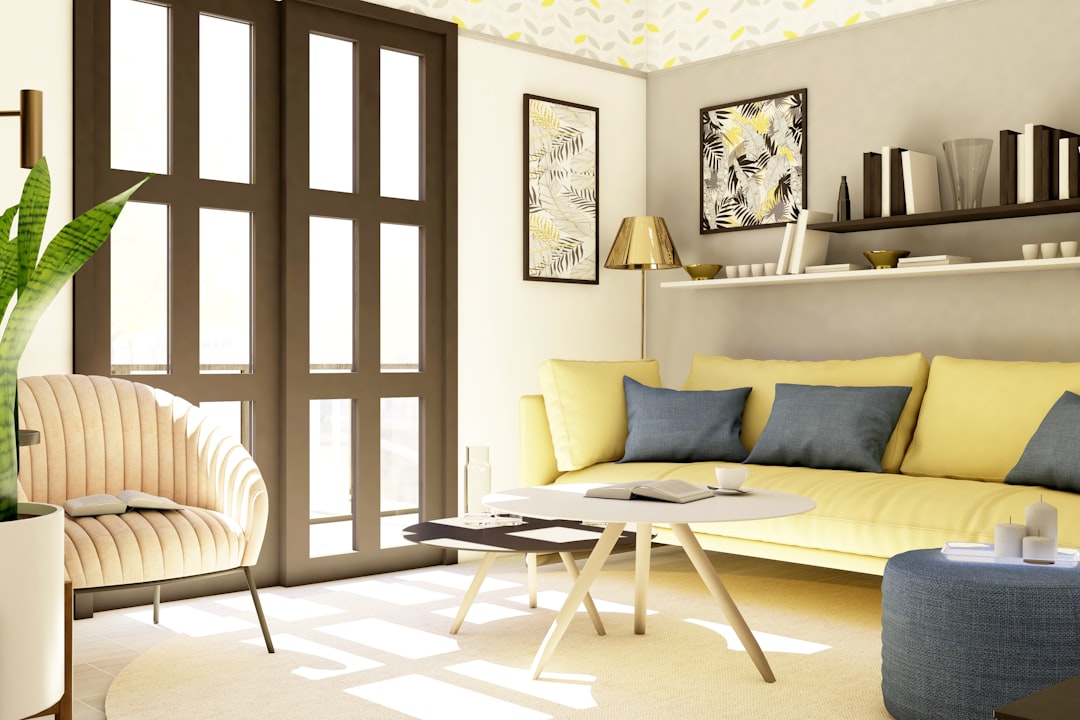
Scale errors extend beyond the cabinet, too. Buyers choose pieces that are simply too large for HDB corridors or doorways, leading to a final placement that blocks natural pathways. And in Singapore’s often north-facing living rooms, where ambient light can be weak, neglecting dedicated lighting is a critical oversight. A single, well-placed LED strip inside the cabinet does more for a display than any arrangement trick; it transforms glass shelves from dim recesses into a glowing centrepiece, making colours pop and eliminating the gloomy shadows that hide your favourite pieces.
Online images can make a rubberwood sideboard look almost identical to a laminated particleboard one, but your living room’s humidity will tell the difference in about six months. That’s the core argument for a physical visit—you’re not just confirming a colour swatch, you’re stress-testing a piece against Singapore’s specific conditions. The door’s glide on a display cabinet, the drawer’s weight on its runners, the precise sheen of a lacquer finish under your own block’s afternoon light; these are tangible qualities that a digital catalogue, no matter how high-resolution, simply cannot convey. You’re buying for the long term, so you need to assess the mechanics and materiality that guarantee it.
This is particularly critical for spatial judgment in our typical floor plans. A console table might look modest on screen, but seeing it in a showroom layout that mimics a 4-room BTO’s entryway reveals its true bulk. You can walk around it, gauge the clearance it leaves for a stroller or a wheelchair, and understand how its height relates to a wall-mounted TV. It’s the difference between a piece that fits and one that merely fills a space; proportionality within your entire living room scheme becomes immediately apparent when you view the full collection arranged as intended.
Local lighting is another variable that defies online shopping. The warm LEDs in a Tampines showroom will cast a different shadow on a fluted detail than the cool, direct sunlight flooding your Pasir Ris living room. That bespoke grey-wash finish you loved in the product shot might read as starkly blue or disappointingly flat under your own ceiling lights. Physical inspection lets you move around the piece, catching how the grain of a solid acacia TV console shifts with the angle—a character that static images erase.
Ultimately, you’re committing to a centrepiece for daily life, not just a delivery. Placing your hand on the sintered stone top of a coffee table, feeling the solidity of a joinery point, or hearing the satisfying thud of a well-sealed cabinet door closes the gap between speculation and certainty. It turns a speculative purchase into a confident one. To truly grasp scale and finish, a trip to see the pieces in person is indispensable; you can start that assessment by browsing Megafurniture’s collection online, but you’ll finalise it on the showroom floor.
The delivery van arrives at your HDB block, and that’s when the real logistics begin. Lift landings in older flats can be narrower than you’d think—typically around 1.2 metres wide—so a large cabinet’s packaging might need to be stripped right there. In condos with a private lift lobby, staircase clearance becomes the issue; a 90 cm wide unit won’t fit through a standard 75 cm stairwell door without disassembly.
Professional assembly isn’t just about convenience. It prevents the amateur hour mistakes that ruin furniture: forcing a cabinet backing against a wall, which cracks the laminate, or mishandling glass panels that then chip at the edges. A proper installer will also check for wall irregularities in your 4-room BTO, using spacers to ensure the unit stands perfectly vertical—something DIY efforts often miss in Singapore’s not-always-square builds.
Warranty coverage here has a specific local clause you need to parse. Humidity-related issues, like wood veneer swelling or metal hardware rusting, are frequently excluded unless explicitly covered. That’s a key point for our environment; a display cabinet placed near a window in a Bedok flat faces constant moisture exposure. Read the fine print to see if the guarantee covers material failure from ambient humidity, not just manufacturing defects.
For comprehensive living room solutions that account for these delivery and warranty specifics, you can review the full range at Megafurniture’s collection. Their teams are accustomed to HDB and condo logistics, which means they’ll usually measure your access points before confirming a delivery date.
Ultimately, the hassle of navigating lift landings or interpreting warranty clauses is worth the effort. Getting it right means your cabinet won’t just arrive—it’ll stay looking good for the decade you plan to keep it.
Search histories don’t lie — Singaporean homeowners are hunting for display cabinet solutions that navigate very specific, local constraints. The queries are precise, grounded in the reality of narrow corridors and festive decor.
Display cabinet for narrow HDB hallway? You’re likely working with a passage under 1.2 metres wide. Look for a unit that’s 30cm deep or less, finished on all sides so it can float as a freestanding feature. A wall-mounted, frameless glass box can work brilliantly here; it displays treasured items without visually shrinking the space further, something a bulky wooden cabinet would instantly do.
How to style it with Chinese New Year decorations? Keep it simple. A single, dramatic piece like a large mandarin orange tree figurine or a pair of crimson ceramic rabbits makes more impact than cluttering every shelf. Layer in texture with a red silk runner underneath your heirlooms, and use the cabinet’s internal lighting to cast a warm, auspicious glow — it’s more elegant than hanging LED lanterns from the doors.
Child-safe glass options are non-negotiable for many families. Laminated or tempered glass is the standard; it’s what you’ll find in most reputable offerings. For real peace of mind, consider acrylic panels instead — they’re virtually shatterproof, though they’ll scratch more easily than glass and can develop a static charge that attracts dust.
Best lighting for figurines in a dim corner? Recessed puck LEDs or a slim LED strip mounted at the top front of each shelf will cast light down and forward, eliminating shadows on detailed collectibles. Warm white light, around 2700K to 3000K, feels inviting and won’t bleach colours. Just ensure there’s a nearby power source or plan for discreet cable management down the cabinet’s back leg.
Create a dynamic skyline by staggering object heights. Place taller items like vases or sculptures at the back or sides, with mid-sized and shorter pieces in front. This prevents a flat, monotonous display and naturally draws the eye across the entire cabinet.
A common mistake in Singapore living rooms is the display cabinet that arrives as a perfect, solitary piece, then becomes an awkward guest at the party. It’s too close to the sliding door, forcing you to sidestep; it blocks the natural path to the balcony; it visually fights with the TV console for attention. That’s why the final step isn’t about the cabinet itself, but its relationship to everything else.
Start by measuring your space twice—once for ambition, once for reality. In a 4-room BTO layout, the walkway between your sofa and the feature wall might only be 90cm; a cabinet deeper than 45cm will choke that flow. Create a simple floor plan, marking windows, doors, air-con units, and permanent sockets. Then place your other key pieces: the TV console’s exact footprint, the sofa’s depth, even the coffee table’s reach. This isn’t just about fitting furniture in; it’s about preserving the room’s functional choreography.
Now, decide on a focal point. In many homes, it’s the television wall—a logical choice that centralises entertainment and storage. If you’re prioritising your collection of ceramics or books, however, the display cabinet might claim that honour. The trick is to avoid two competing centres of visual weight; if the TV wall is the main event, let the cabinet play a supporting role, perhaps on a perpendicular wall in a complementary finish like oak veneer or lacquered MDF.
This deliberate layout ensures your cabinet provides its intended visual interest—a curated display of travel mementoes or heirlooms—without disrupting the living room’s daily rhythm. You’ll avoid that cluttered, piecemeal look where every wall shouts equally. The result is a room that feels organised and centred, where the cabinet isn’t just stored, but thoughtfully placed.
" width="100%" height="480">Display cabinet arrangement: creating visual interest and balance