The typical 3-room BTO living room is a 12 square metre box, where an overstuffed accent chair can dominate the entire visual field. In that compact footprint, a buyer’s first consideration isn’t style but sheer physical volume—a bulky wingback that looks stately in a Tampines showroom will swallow a Punggol flat’s breathing space. You’re measuring for leg clearance first, ensuring there’s still a 600mm walkway to the balcony door after the coffee table goes in. That’s where dimensions trump design; a compact slipper chair or a low-profile armless design keeps the room feeling organised, not cluttered.
Contrast that with a 30 square metre condo great room in a District 15 resale, where the challenge shifts from pure space management to visual proportion. Here, a single dainty chair can look lost and insignificant beside a large sectional. The scale needs to anchor a zone, perhaps pairing two accent chairs to form a conversation nook distinct from the main sofa area. There’s room for deeper seats, higher backs, and more substantial silhouettes—think a generous swivel chair or a pair of classic club chairs that hold their own.
Narrow HDB layouts, common in older flats in Bedok or Queenstown, introduce another constraint: the throughway. An accent chair placed at a room’s edge mustn’t obstruct the natural traffic flow from the main door to the kitchen. Armless or chairs with a narrow seat depth are a safer bet, allowing them to tuck more neatly against a console table or into a corner without becoming a shin-barking hazard. It’s a practical calculus—favourite form follows necessary function.
Visual bulk is a separate issue from actual dimensions. A dark, solid-wood frame with thick upholstery feels heavier in a confined space than a light-toned, leggy chair of similar size. In many 4-room BTOs, a leggy acrylic or rattan accent piece introduces texture without the visual weight, preserving a sense of airiness. That’s the subtle trade-off: a chair that’s all cushion and no void space can make a room feel finished yet strangely cramped.
For landed property living rooms, the game changes entirely. With expansive floor plates in a Siglap semi-detached, the accent chair often serves as a sculptural element within a much larger composition. You can finally consider that high-backed statement chair or an oversized organic form, pieces that would overwhelm an HDB corridor. The focus moves toward creating intimate seating zones and layering sightlines—the chair becomes a centre of visual interest across a distance, not just an adjacent perch.
That afternoon sun streaming through your Tampines condo window does more than warm the floor; it bakes and bleaches, while our 80% humidity waits to warp and weaken. Material selection here isn't just about aesthetics—it’s a defence strategy against the climate, and getting it wrong means a mouldy frame or a sun-bleached armrest within a single season.
For upholstery, breathability is non-negotiable in non-air-conditioned spaces. Natural linen or linen-cotton blends are a classic choice, as their loose weave allows air to circulate, reducing the risk of trapped moisture that leads to mould. Performance velvets, treated for stain and water resistance, have become a quiet favourite for their durability against pet hair and spills, though they can feel warmer against the skin. Avoid dense, non-porous synthetics in common areas; they’ll trap sweat and humidity, creating a perfect environment for mildew.
Frame and leg materials face a different test. Solid hardwoods like treated teak or acacia typically handle moisture fluctuations better than engineered timber, which can delaminate and warp over time in sustained humidity. That subtle bowing in a chair leg isn’t poor craftsmanship—it’s the plywood layers inside reacting differently to the damp air. For pieces that will sit directly in a sunbeam, consider finishes that are UV-resistant, or be prepared for a significant colour shift.
The real compromise often shows in details. A tightly woven performance fabric might fend off your golden retriever’s hair but feel stifling in a west-facing room; a beautiful, breathable linen might show water marks from a carelessly placed glass. It’s about prioritising the threat—direct sun, pet traffic, or constant ambient dampness—and letting that guide your choice.
Start by standing across the room and squinting at your sofa. You're looking for its primary shape, not its colour or fabric. A Lawson sofa, common in many landed property living rooms, presents a boxy, tailored silhouette with defined arms and back cushions. A mid-century modern piece, however, is all about low, clean lines and a floating base. Identifying this core form is the first step; it tells you whether to seek harmony or create deliberate tension with your accent chair.
Pairing a plush, curved modern sofa with an angular chair creates visual energy. That soft, enveloping sectional you love for its organic feel gets a jolt of modernity from a sharp-lined swivel chair. The contrast works because it’s intentional—the chair becomes a sculptural focal point, not an afterthought. In a 4-room BTO layout, this dynamic pairing can define separate zones without needing bulky room dividers.
For a more curated, serene look, match the linear language. A sofa with strong, straight legs and a flat rail frame asks for a chair that continues that vocabulary. Think of a streamlined bench seat or a sling chair with similar legwork. This approach builds cohesion, which is often the safer bet for compact HDB living rooms where visual clutter is the real enemy. Everything feels purposefully selected, not just accumulated.
Form is meaningless without proper proportion. A bulky, over-scaled armchair will dwarf a slender, low-profile sofa, no matter how perfectly their lines align. You’re aiming for visual weight to be complementary, not competitive. Measure the chair’s height against your sofa’s arm height, and consider its depth—a chair that protrudes too far into the walkway in a corridor-linked flat defeats its own purpose.
The classic example is a structured Lawson sofa with a Saarinen tulip chair. One is all tailored upholstery and right angles; the other is a single, fluid pedestal of moulded plastic. It works because the contrast is complete and confident—a lesson in not mixing half-measures. In many Singapore homes, the instinct is to match everything, but a single, well-chosen contrast piece often delivers more personality than a perfectly coordinated set ever could.
A common regret in Singaporean living rooms isn't about colour or fabric, but about a chair that simply won't fit through the front door. Buyers get fixated on a design, only to realise the lift in their HDB block can't accommodate its dimensions, or that the staircase in their landed terrace house is too narrow for a turn. Pre-war walk-ups present a different puzzle, where a chair that fits through the door might still need to be fully assembled inside the flat, a detail often overlooked until movers are standing on the landing with a disassembled frame and no Allen key.
The spatial miscalculations continue inside. An oversized accent chair, chosen for its dramatic silhouette, can dominate a 4-room BTO living room, blocking the natural path to the balcony or, more critically, the airflow from the wall-mounted aircon unit. That creates hot spots and forces the system to work harder, a practical annoyance that undermines the chair's visual appeal. It's a classic case of prioritising the statement piece over the room's actual function.
Scale is everything, and it's best judged with tape on the floor. Mark out the chair's footprint, then walk around it; leave at least 60cm for passageways, and ensure it doesn't encroach on the swing of a door or the pull-out space of a TV console drawer. For homes with central aircon vents in the ceiling, a tall chair back might be fine, but for most HDBs with wall units, a lower profile keeps the cool air circulating. That plush, high-backed armchair might belong in a landed property's study, not a compact condominium living area.
Material choice, while often about aesthetics, also ties into maintenance in our climate. A light-coloured linen looks fresh in a showroom but may show humidity spots in a north-facing flat; performance velvets or treated cottons handle the moisture better. Ultimately, the most beautiful accent chair fails if it disrupts the rhythm of daily life—if you're constantly edging past it or sweating because it's blocking the breeze.
A chair that groans when you sit isn’t just annoying—it’s a sign you’ll be shopping again within two years. In Singapore’s humid climate, where dust settles quickly and fabric cleaning is a near-weekly ritual, construction details aren’t just about luxury; they’re about survival. You’ll want to look for kiln-dried hardwood frames, which resist warping far better than cheaper, green wood that can twist in our consistent 80% humidity. Corner blocks, glued and screwed at the joints, are non-negotiable for stability; they’re what stop that groan from becoming a crack.
The gold standard for seat support is eight-way hand-tied springs, a system where each coil is individually knotted to the next in a tight grid. It’s labour-intensive, which means it’s often reserved for higher-end pieces, but it creates a responsive, contouring seat that won’t sag in the middle after a year of nightly use. For most people, the upholstery fabric is the first thing they notice, but its rub count is what matters. Aim for a double-rubbing score over 15,000 Martindale cycles; that’s the benchmark for heavy domestic use, meaning it’ll withstand years of friction from sitting down, shifting around, and leaning against it without showing undue wear.
Practicality in maintenance is just as critical. Cushion covers with robust zipper closures are essential, not a luxury add-on. They allow you to remove the covers for a proper wash, which you’ll need to do frequently to combat the fine dust that filters into our flats from nearby construction or the MRT line. A sewn-in cover might look cleaner initially, but it traps dirt and makes professional cleaning your only, costly option.
These features collectively signal a piece built for the long haul in a typical 4-room BTO or a compact condo living room. They translate to a chair that won’t just complement your sofa visually, but will physically endure the same daily rhythm—a worthwhile consideration when you’re planning a refresh that should last another decade. You can find pieces that meet these criteria by focusing on construction descriptions in product specs.
" width="100%" height="480">Matching accent chairs to your existing sofa: A visual guideOnline photos of a fabric or a chair’s dimensions can’t tell you how it will feel in a humid Singapore living room after six months, or whether the seat depth actually suits someone of average Asian height. That’s the gap a showroom visit closes. You need to physically test the seat cushion’s firmness, the backrest’s support, and the texture of materials like performance velvet or linen against your own skin; what looks elegant online might feel uncomfortably warm or coarse in our climate. At Megafurniture’s Joo Seng showroom, you can do this within room settings that mimic common HDB layouts, letting you visualise how a complete solution—accent chair, coffee table, storage unit—actually fits and flows in a 4-room BTO’s living area. Consider seat depth. Many imported designs are built for taller averages, leaving a shorter person with an awkward gap behind their knees or forcing them to sit slumped forward. In the showroom, you can sit properly, assess whether your feet comfortably reach the floor, and check if the chair’s proportions align with your existing sofa’s height and depth. It’s a five-minute test that prevents a years-long regret. The same goes for fabric: a bouclé might be charming, but will it trap moisture and feel clammy? A synthetic performance fabric might look technical, but does it have a pleasant handfeel? You can’t answer that on a screen. Beyond single pieces, the showroom’s staged environments help you judge spatial relationships. You see how a low-profile TV console might anchor the room, how a sideboard’s finish interacts with your imagined wall colour, and whether a room divider actually makes sense in your narrow layout. It turns abstract planning into concrete observation. For BTO owners especially, who are working from empty shells, this is crucial; you’re not just buying a chair, you’re assembling a coherent room from components that need to work together in limited square metres. That final confirmation of scale, comfort, and material compatibility is what makes the trip non-negotiable. It moves you from browsing a catalogue to making a confident decision, one where you’ve already mentally placed the item in your home. You can start that process by exploring
the living room furniture rangeonline, but the visit itself is the indispensable step. After all, the chair you order will live in your space for a decade, not just in a product image.
A BTO's delivery window is a rigid, unforgiving slot—you'll get a date, not a choice, and your new accent chair needs to be ready for it. Condo lifts are often booked weeks in advance, too, turning a simple drop-off into a logistical puzzle that demands precise coordination with the building's management. Miss your allocated time and you're facing rescheduling fees or the prospect of your furniture sitting in a warehouse; that's why confirming a retailer's delivery flexibility before purchase isn't just convenient, it's essential for Singapore's specific housing realities.
Assembly for a straightforward side table is one thing, but a complex swivel chair with a reclining mechanism or a modular unit with integrated lighting is quite another. Many buyers, especially in a 4-room BTO with limited space for manoeuvre, underestimate the sheer hassle of deciphering a 40-step diagram and hunting for that one missing M8 bolt. Professional assembly, while an added cost, saves hours of frustration and ensures the piece's structural integrity from day one—a worthwhile investment for anything beyond basic flat-pack.
Warranties here must account for our climate. A fabric's fading in a sun-drenched Pasir Ris living room isn't a manufacturing defect; it's an environmental certainty that many standard one-year policies simply won't cover. Look for explicit terms on UV resistance or performance fabrics like Crypton, and scrutinise the small print for exclusions related to humidity warping or rattan drying out. The structural guarantee on frames and joints is far more critical for long-term use, particularly for frequently used recliners or chairs that will bear significant weight.
Ultimately, the smoothest experience comes from a retailer that bundles clear delivery scheduling, optional professional assembly, and a warranty that speaks to local conditions. It’s the difference between your new centrepiece arriving as a seamless addition and it becoming a project in itself.
The most revealing questions about accent chairs never appear in glossy catalogues; they're typed into search bars at 2 a.m., halfway through a reno panic. Here’s what people in Tampines and Toa Payoh are actually asking.
Can an accent chair fit in an HDB bedroom? In many 12 sqm master bedrooms, it's a push—you’ll typically need to forgo a bedside table or commit to a slimmer profile chair. The trick is to treat it like a dedicated dressing spot, not an afterthought.
What’s the best fabric if you have cats? Performance velvet or a tight-weave linen blend will hide pulls better than a loose bouclé. Crypton or similar treated fabrics are a solid investment; they resist stains and odours, which is crucial when the favourite nap spot isn't the cat tree you bought.
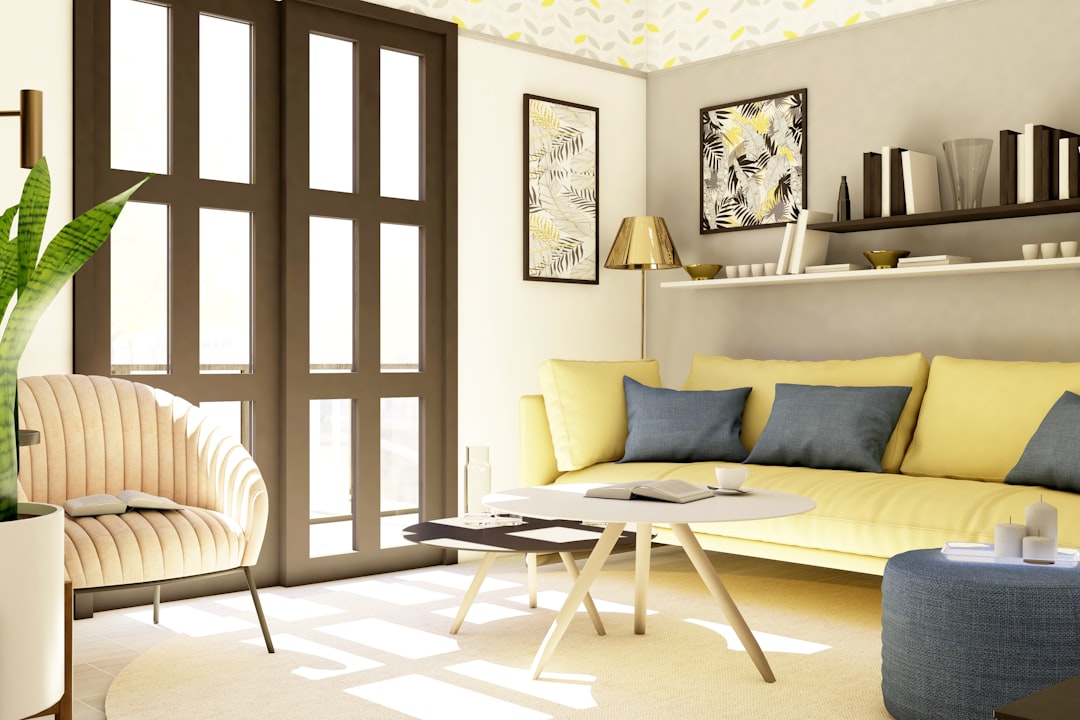
For a 4-room resale living room, how many chairs is right? Two is the practical sweet spot for conversation—it creates a balanced seating area opposite a three-seater sofa. One chair often looks stranded, like it’s waiting for a friend who never arrived.
Custom sizing for an odd-shaped bay window in a pre-war walk-up? That’s where costs jump. Expect quotes starting around $1,200 for a simple tailored seat cushion and frame, climbing to $2,400 or more for fully built-in joinery that incorporates storage beneath. It’s a premium, but for that awkward Eunos corner that standard furniture won’t touch, it’s often the only solution that looks intentional.
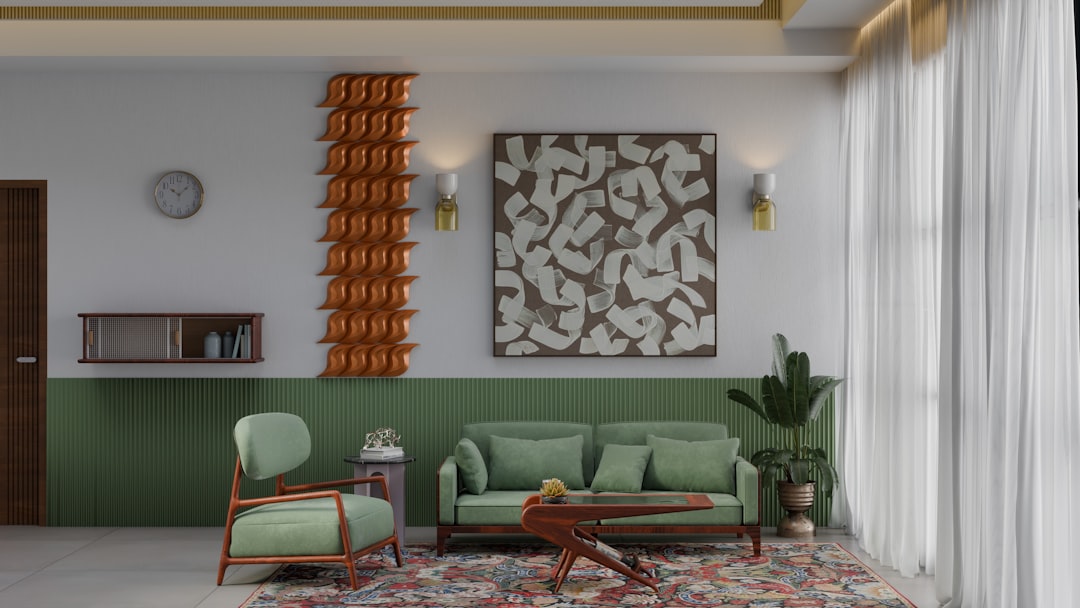
Select an accent chair in a color that complements your sofa without matching it exactly. For instance, a navy sofa pairs beautifully with a burnt orange or mustard yellow chair, creating a vibrant yet harmonious contrast. This approach adds a deliberate pop of color and visual interest to your living room arrangement. It ensures the chair stands out as a distinct, purposeful element within the space.
Create a curated look by choosing a chair that speaks to your sofa's style in a different dialect. A modern, clean-lined sofa can be accented with a chair that shares a similar silhouette but in a different material, like leather instead of fabric. Alternatively, introduce a single classic element, such as a button-tufted chair beside a contemporary sectional, to build visual conversation. This strategy achieves a collected, designer feel rather than a perfectly matched set.
Successfully mix patterns by varying their scale when pairing with a solid-colored sofa. If your sofa is a neutral solid, introduce a chair with a large-scale geometric or floral print for drama. Conversely, a patterned sofa is best balanced with a chair featuring a small, subtle texture or tone-on-tone design. The key is to ensure the patterns don't compete but rather create a layered, cohesive look.
Ensure the scale and proportions of the accent chair relate appropriately to your existing sofa. A large, overstuffed sectional requires a substantial armchair to hold its own visually, avoiding a dwarfed appearance. For a sleek, low-profile sofa, consider a chair with similar airy lines or raised legs to maintain a light aesthetic. Proper scaling guarantees both pieces feel intentional and balanced within the room's layout.
The best-looking accent chair in the showroom is often the wrong one for your flat, because you bought it with your eyes and not with a tape measure. Before you commit, you need a physical checklist that moves beyond the screen and into your actual space.
Start by tracing the chair's exact footprint on your living room floor using masking tape or newspaper cutouts. That sleek, low-profile armchair might claim to be space-saving, but its 90cm swivel radius becomes a trip hazard in a narrow walkway between your sofa and TV console. Leave the tape down for a full day—you'll quickly see if it blocks a cupboard door in a 4-room BTO layout or makes the path to the balcony feel like a corridor.
Next, hold material swatches against your existing sofa in the room's natural light. That cool grey performance velvet might look cohesive under warm showroom LEDs, but in the afternoon sun from your Bedok flat's window, it could clash with your sofa's warmer undertones. Texture is just as critical; a nubby bouclé might feel inviting, but placed next to a sleek leather sofa, the contrast can look accidental rather than curated.
Finally, anchor everything to a final budget that includes all ancillary costs: delivery to a high-floor unit, assembly, and even potential removal fees for the old chair it's replacing. A $600 chair can easily become an $850 expense once you factor in a $150 delivery charge to a landed property in Siglap and a $100 setup fee. Let the room's primary function dictate your final priority—if it's for conversation, ensure the chair's height and orientation foster eye contact; if it's for reading in a 12 sqm space, prioritise a compact footprint and a good lamp behind it; if it's primarily for extra seating, ease of movement and durable, cleanable fabric matter most.