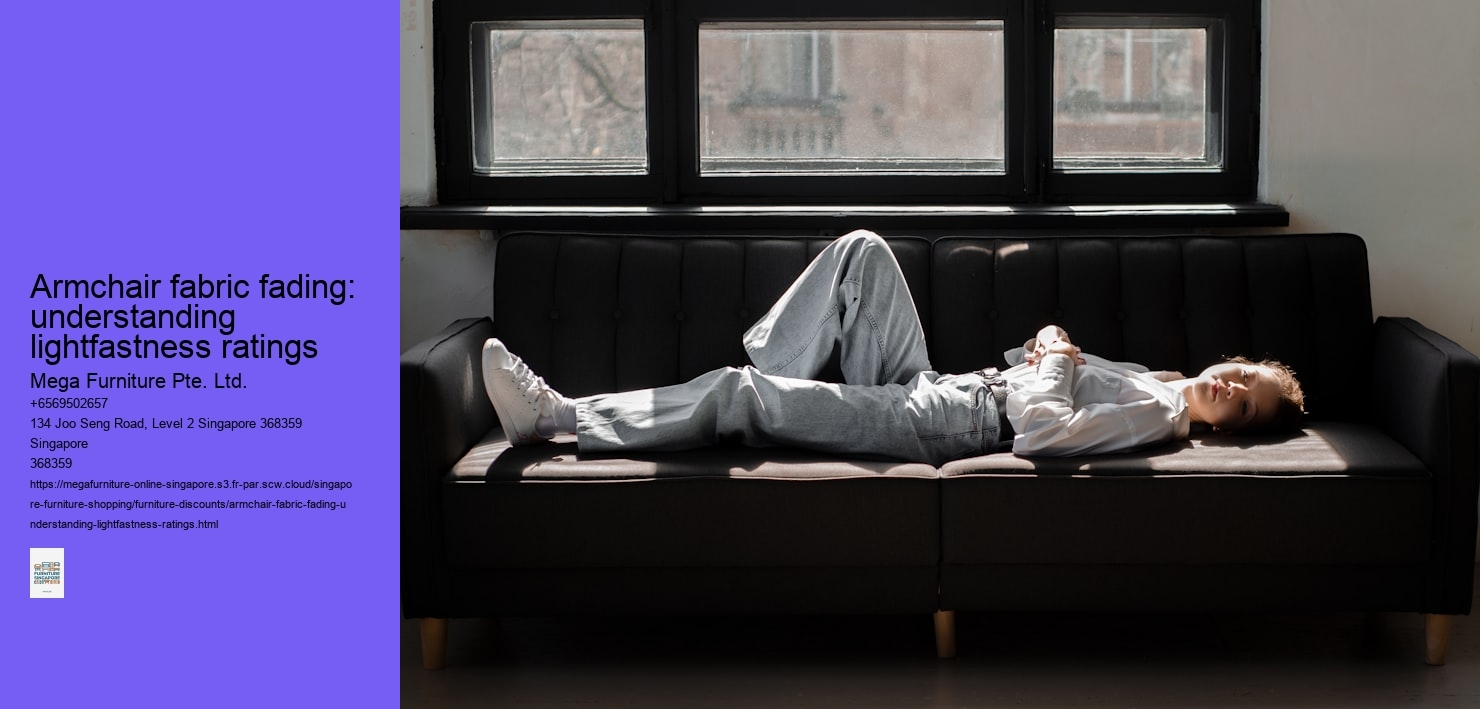
That armchair in your east-facing Bedok living room might look perfect now, but give it a year of relentless morning sun and you’ll see the story written in faded patches. In Singapore, UV exposure isn't a minor concern—it's a daily design constraint, particularly for homes with north-south facing windows where light streams in for most of the day. This is where lightfastness ratings move from a technical footnote to a critical purchase spec, the difference between a fabric that holds its colour and one that surrenders it in a single season.
Lightfastness is measured by international standards, chiefly ISO and AATCC, which test how many hours of intense light exposure a fabric can withstand before noticeable fading occurs. A rating of ISO 5 or AATCC 4-5 is considered good for general use, but for that prime spot beside your condo's floor-to-ceiling window, you'll want to look for ISO 6 or AATCC 6 and above. Think of it as a fabric's SPF rating; the higher the number, the longer it lasts before it burns out.
For HDB and condo living rooms, where furniture placement is often dictated by limited floor plans rather than ideal light conditions, ignoring this spec is a common regret. A vibrant blue velvet or a rich emerald green on an accent chair might be your favourite splash of colour, but without a high lightfastness grade, it’ll turn muted and patchy, undermining the whole room’s palette. Performance fabrics from brands like Sunbrella or Crypton are engineered for this, but many standard velvets and linens simply aren't—always check the technical sheet.
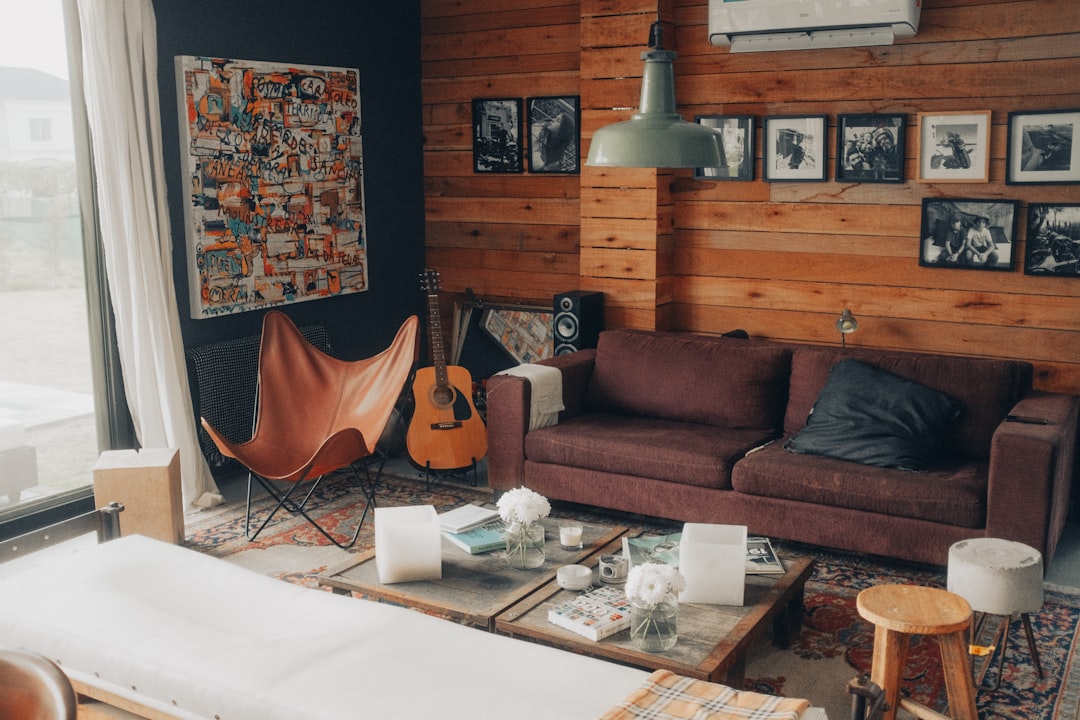
The practical takeaway is to treat lightfastness with the same priority as dimensions or fibre content. Before committing to an armchair for a bright spot, ask for the rating directly; if a retailer can’t provide it, that’s a data point in itself. It’s a boring detail, until you’re the one living with a faded, two-toned chair that you can’t rotate out of the sun’s path in your 4-room BTO layout.
The sun's path across Singapore is predictable, but its effect on your armchair depends entirely on which window it hits. A compact 12 sqm HDB study corner might get a glancing morning beam, while a landed property sunroom with floor-to-ceiling glass faces a full day's bombardment. That's why mapping your chair's placement against the sun's trajectory is more useful than any generic lightfastness chart.
Western afternoon sun in many resale flats is particularly punishing. It's the hottest, most direct light, and it often strikes exactly where you'd naturally place a reading chair — opposite the window to enjoy the evening view. Cheaper fabrics, like some basic polyesters or unlined linens, can start fading visibly within a single season there. You'll see it first on the armrest or head cushion, a bleached patch that looks like wear but is actually just light damage.
In newer BTOs with more thoughtful orientation, the risk might be lower. But you still need to observe. Track the light across your living room floor for a full day; note where the intense patches land and how long they linger. An armchair destined for a spot that gets three hours of direct afternoon light requires a different fabric choice than one destined for a shaded corner in a north-facing condominium.
This isn't just about avoiding fading — it's about managing comfort and longevity. A chair bathed in relentless sun will also heat up considerably, making some materials like leather uncomfortable to touch, and it can accelerate the breakdown of foam cushions inside. So consider the sun map before you even consider the colour; a pale bouclé might look perfect in a north-facing room, but in a west-facing one, it's a commitment to frequent, vigilant shading.
Acrylics that are solution-dyed represent the top tier for Singapore's conditions, because the pigment is integrated into the polymer fibre itself before it's extruded. This means the colour won't wash out with humidity-driven cleaning, and it resists fading under intense, direct sun far longer than surface-dyed fabrics. You'll find these fibres in performance fabrics from brands like Sunbrella, often used for outdoor-rated cushions that end up living inside sun-drenched, east-facing living rooms. They handle the 80% humidity without moulding as easily as natural fibres, and while they carry a premium, that cost translates directly to years of retained colour. For a homeowner in a Bedok flat with a balcony door that floods the room with light, it's the difference between a chair that looks tired in two years and one that lasts a decade.
Certain engineered polyesters, especially those with high UV resistance and moisture-wicking treatments, sit just below solution-dyed acrylics in the hierarchy. They're often more affordable and widely available, making them a common choice for mid-range living room accent chairs that still need to withstand the climate. The key is to look for specific performance claims—terms like "lightfast" or "UV-stable"—rather than assuming all polyesters are equal. A cheap, basic polyester will still degrade, but a well-engineered one can handle the solar intensity of a west-facing Tampines condo window for years without significant fading. It’s a practical compromise that balances upfront cost with a realistic lifespan in our environment.
Linen, cotton, and wool occupy the bottom rung for this specific, punishing context—they're beautiful, breathable, and utterly vulnerable to our combination of light and moisture. A natural fibre armchair in a bright, humid room will fade noticeably within a single year, and the high humidity can lead to mildew if the fabric isn't kept perfectly dry. Many buyers love the texture and feel, which makes them a favourite for bedrooms, but deploying them in a sunny living room is essentially a decorative, short-term choice. You're signing up for a look that will soften and fade, which can be a valid aesthetic if you treat the piece as a consumable rather than a long-term investment.
Low-cost velvets, particularly those with poor dye fixation and no lightfastness treatment, are the canaries in the coal mine for sunny rooms—they fade the fastest, often in uneven patches. That rich, emerald green velvet accent chair from a budget collection can turn a sad, muted teal where the sun hits it, while the shaded sides remain dark, creating a stark two-tone effect. It's a classic signal of a material chosen for immediate visual impact over durability, and in a 4-room BTO with large windows, the damage can be apparent within months. Spotting these velvets is easy if you check tags for lightfastness ratings; if there's no rating, assume it's destined for a rapid decline.
In the end, your fabric choice is a clear signal of the chair's intended lifespan and value. A retailer offering a performance fabric at a competitive price is betting you'll notice the chair holding up, while one pushing a low-lightfastness velvet into a sunny showroom setting is counting on an impulse purchase. For a homeowner planning a seven-year refresh cycle, a mid-tier polyester might suffice, but for someone who wants a forever piece in a landed property's sunroom, only the top-tier materials make financial sense. The hierarchy isn't just about science; it's a map of how seriously a furniture piece takes Singapore's environment, and by extension, your long-term satisfaction.
You’ll see the first signs of fading on the armrest facing your BTO’s floor-to-ceiling window, not on the seat cushion—a harsh lesson in Singapore’s light. Buyers often prioritise a favourite colour over its lightfastness rating, a gamble that plays out slowly but inevitably against our equatorial sun. That perfect navy or charcoal grey might look sophisticated in the showroom, but in a west-facing living room in Tampines or Bedok, it’ll develop stark fade lines within a few years, turning a statement piece into a dated one.
Ignoring window orientation in the BTO floor plan is another common misstep. A north-south facing unit in Woodlands gets a very different quality of light compared to an east-west block in Punggol, where afternoon sun can be relentless. Many simply match fabrics to their colour scheme without considering which chair will sit in that direct solar path for six hours a day; performance fabrics like Crypton or Sunbrella, with higher lightfastness ratings, become non-negotiable for those spots, not just an upgrade.
The real sting comes around the seven-year mark, often just after the HDB lease renewal window when you’re planning other updates. That’s when the cumulative damage becomes undeniable, and you realise the cost of replacing an entire armchair’s upholstery rivals a significant portion of its original price. Darker fabrics, ironically, show the fade more cruelly—the contrast between sun-bleached and protected areas is sharper, turning a uniform colour into a patchy map of your room’s light exposure.
It’s a classic case of short-term aesthetics trumping long-term liveability. You choose a luxurious bouclé or a rich velvet for the texture and mood, only to watch it degrade in a specific, predictable pattern. For pieces destined for bright zones, the lightfastness rating on the fabric tag—a number many gloss over—should carry more weight than the Pantone shade. A slightly less perfect hue that lasts a decade is a smarter buy than a perfect one that fades in five.
Lightfastness measures a fabric's resistance to fading when exposed to light, especially UV rays. For living room armchairs, this rating is critical as they are often placed near windows. Higher lightfastness means the fabric's color will remain vibrant for longer, preserving the chair's aesthetic appeal and your investment in your furniture.
A showroom’s controlled lighting can be a buyer’s worst enemy. You’ll find a rich, vibrant velvet under the warm spotlights, only to have it appear flat and dull in the harsh afternoon sun streaming through your full-height windows in a Bukit Timah semi-detached. That’s why the first move isn’t to sit—it’s to walk to the nearest window or ask for a portable lamp to examine fabric samples under the strongest light available.
For landed property owners with extensive glazing, or even for east-facing condos in Bedok catching the morning sun, the technical specification to ask for is the lightfastness rating. Don’t settle for vague promises of “fade-resistant”; request the specific test standard, typically ISO 105-B02. A rating of 5 or above is good, while 7 or 8 indicates excellent resistance to fading—a critical detail for an armchair destined for a permanent spot beside a glass door.
The next question must address warranty exclusions. Many warranties cover manufacturing defects but explicitly void claims for sun damage. Ask directly: “Does the fabric warranty exclude fading from sunlight exposure?” The answer will tell you everything about the material’s real-world durability and the retailer’s confidence in it. If they hesitate, that fabric isn’t for a bright room.
This is where visiting a physical showroom like Megafurniture’s at Joo Seng proves its worth. You can organise swatches side-by-side, comparing a performance polyester against a natural linen under the same intense light. You’ll see how a tight weave fares against a loose one, and how darker colours often hold up better than pastels. It’s a five-minute test that can save you from a faded, patchy chair in two years.
Beyond the fabric, inspect the joinery and finish in that strong light. Run a hand along the wooden frame to feel for smooth sanding, check the consistency of stain colour, and look for any gaps in the upholstery stitching. A piece that looks impeccable under interrogation is one that’s been built with care.
That sheer curtain you installed to protect the armchair from the afternoon sun? It’s a decent first line of defence, but ultraviolet rays are persistent. They’ll still bounce off walls and floors, slowly leaching colour from the fabric over years — it’s a delay, not a solution. For east-west facing windows in a BTO, you’ll need to think about more than just window dressings. Can faded furniture from your first BTO flat be restored? In most cases, no — dye degradation is permanent. A local upholsterer might offer fabric dyeing services, but results on worn furniture are patchy and unpredictable; for a quality armchair, a full reupholstery job is the only professional route. That’s why lightfastness ratings matter from the start. A fabric rated 6 or 7 (on the 1–8 blue wool scale) will resist fading for a decade or more, even in a sun-drenched corner of a Pasir Ris condo. For homes with pets or kids, the stain-resistance conversation often overshadows lightfastness, but they’re connected. Frequent cleaning with harsh solutions can accelerate colour loss on lower-grade fabrics. Performance fabrics like Crypton or certain treated velvets often bundle high lightfastness with stain resistance — a pragmatic choice for a family room, though the initial cost is higher. After 10 years, you’re facing a choice: replace just the fabric or the entire chair. Reupholstering a well-built armchair here typically costs between $800 and $2,000, depending on fabric and complexity. A brand-new chair of comparable quality starts around $1,200 and climbs steeply. The calculation hinges on the frame’s condition; if it’s solid teak or beech from your initial investment, re-covering it is usually the more economical and sustainable path. If it’s a lightweight frame already showing wear, replacement makes more sense — you can
browse the optionswith both lightfastness and future maintenance in mind.
Delivery day in an HDB block often reveals a logistical oversight: a massive armchair wedged in the lift lobby because nobody measured the door. The standard HDB lift interior is around 1.5m wide by 2.1m deep, but the entrance can be narrower. For a large, high-backed recliner or a deep-seated accent chair, you’ll need to confirm the item’s packed dimensions against that 0.8m lift doorway—getting it up the stairwell is rarely an option.
Assembly services typically mean a two-person team will build the chair in your living room. The critical question is placement. If you’ve bought that chair specifically for a sunny corner by the window in your Sengkang BTO, you must confirm the team will position it there as part of the service. Many will only assemble and leave it in the centre of the room; assuming they’ll haul it to your chosen spot, especially in a cramped 4-room layout, is a common mistake.
Then there’s the warranty, a document where the real cost often hides. Scrutinise it for exclusions related to ‘environmental fading’ or ‘sunlight damage.’ This is a standard clause that voids coverage for fabric discolouration from UV exposure, effectively shifting the full replacement cost to you after a year or two. That’s why the lightfastness rating of your chosen fabric isn’t just a technical detail—it’s your first line of defence against a voided warranty.
For a performance velvet or treated linen in a west-facing room, a high lightfastness grade is non-negotiable; the warranty won’t save you. Some retailers offer extended protection plans that might cover fading, but you’re paying extra to insure against their own policy’s exclusions. It’s a clever bit of business.
Ultimately, the fine print dictates the long-term cost. A chair that fades within the warranty period but is excluded from coverage becomes your problem entirely—a disappointing outcome after navigating delivery and assembly in the first place.
The fabric swatch looks perfect under showroom lights, but that’s where most mistakes begin. You’re not buying it for a windowless warehouse in Joo Seng — you’re buying it for your east-facing living room in Bedok, where the morning sun will hit it for three solid hours. That lightfastness rating on the label isn’t a suggestion; it’s a forecast. Cross-reference it ruthlessly with your room’s actual sun exposure, because a fabric rated ‘5’ might last a decade in a north-facing condo in Tanah Merah, but it’ll look washed-out in three years in a landed property’s sunroom.
Next, factor in the realities of Singaporean living, which are less about aesthetics and more about survival. Pet claws aren’t a maybe — they’re a given on any textured weave, and humidity resilience is non-negotiable. A bouclé or linen that feels luxurious in an air-conditioned showroom can develop a faint mustiness in a humid 4-room HDB, where the aircon is only on at night. Performance fabrics like Crypton or treated velvets often handle this duality better, resisting both moisture and scratches without looking overly technical.
Then there’s the final, physical hurdle: your corridor. The armchair’s listed dimensions might fit your planned corner, but you must verify it can actually navigate the 90-degree turn from your HDB lift lobby into your flat. Measure the narrowest point, typically the doorway or a service yard corner, and add at least 15cm to the chair’s widest dimension for the angle of tilt. It’s a mundane step that prevents the kind of delivery-day drama that ends with a scratched door frame and a chair stuck in the common corridor.
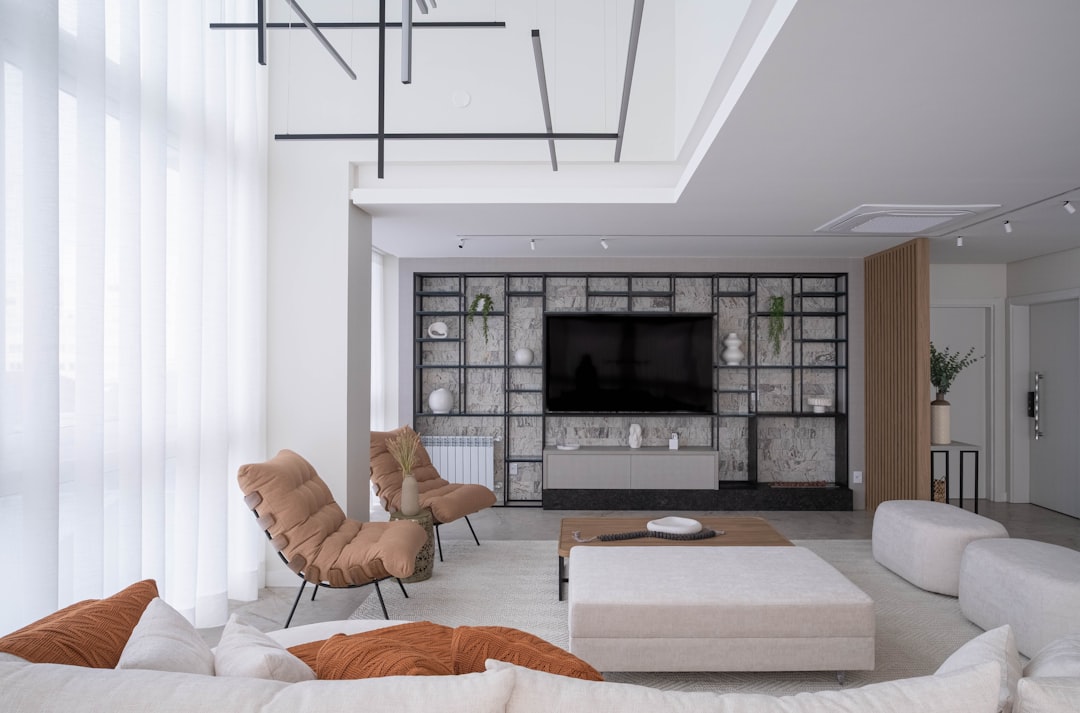
This three-point decision matrix — light against sun, material against lifestyle, dimensions against architecture — is what separates a purchase that fades prematurely from one that stays viable for its intended 7–10 year refresh cycle. It forces you to see the chair not as a standalone object, but as a component interacting with your specific environment. You can then browse options with a clear brief, knowing that a fabric’s colour is only as good as its context.